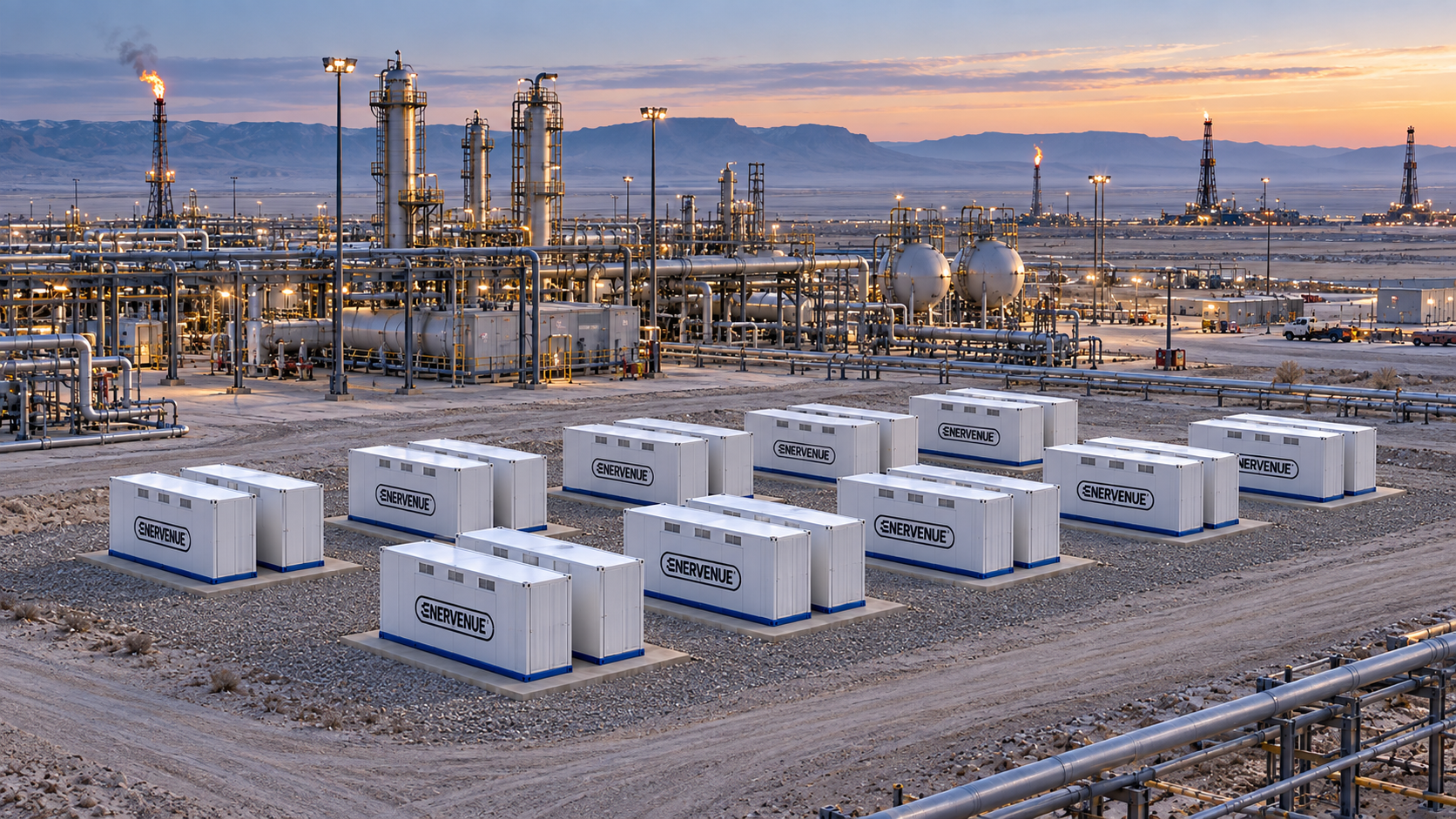
Remote gas wells, gathering stations and wellhead controls run on small diesel sets or on lead-acid banks charged by solar, replaced every few years by a crew that drives hundreds of kilometres to do it. Operators buy in units of a few hundred kilowatt-hours to a megawatt-hour per site and think in tens of sites. The industry has already proved the alternative: in May 2025 Aramco commissioned a 1 MW iron-vanadium flow battery at Wa'ad Al-Shamal to power up to five gas wells for 25 years, replacing lead-acid, rated -8°C to 60°C. Offshore, platforms burn fuel keeping engines spinning as spare capacity, and battery hybrids have shown 30 to 40 per cent fuel reductions in dynamic-positioning duty. The problem is understood. What operators ask now is which chemistry survives thirty years in the desert or at sea, what its warranty says at Saudi ambient, and whether the vendor will still be there.
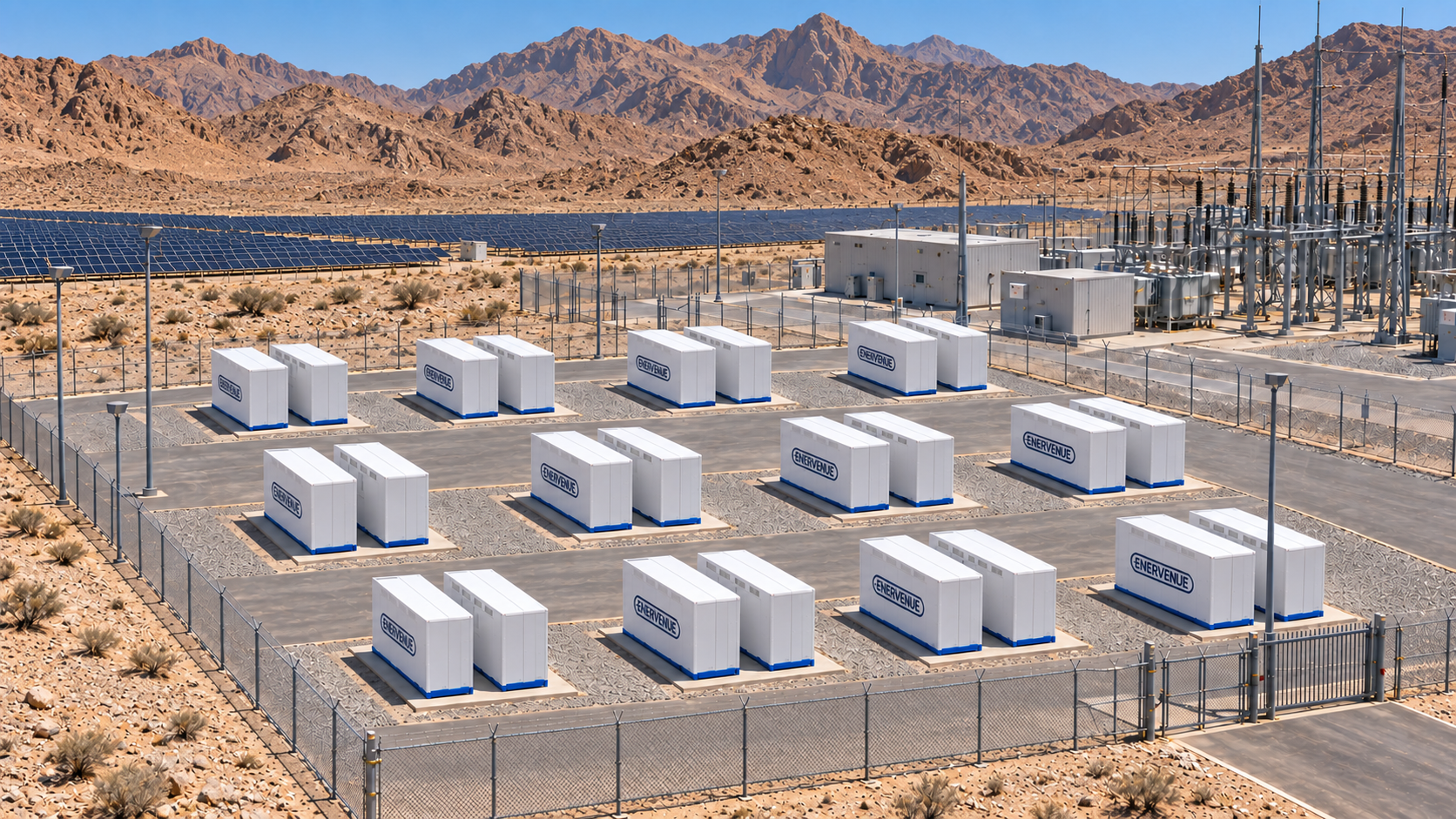
A sealed, stationary, non-flammable battery with no pumps, tanks or electrolyte to manage, charging from solar by day and carrying the site through the night. The Aqueous Metal Cell is designed for 30,000 cycles and 30 years with no scheduled augmentation; the containerised system operates from -20°C to +60°C. Where a site already runs flow batteries, the comparison is factual: 87 per cent round-trip efficiency at system level against published flow figures around 68 to 73 per cent, a 1.4C rate against C/4 and slower, roughly twice the energy per square metre of ground, and a simpler balance of plant; flow's longer duration is acknowledged. For single well sites the Energy Core, 30 kWh at 48 Vdc and natural-air cooled, is the product on our roadmap for distributed and remote duty. Solar, wind, storage and an electrolyser at a remote site is an architecture the sector is exploring, and the storage layer is the same battery.
Fewer site visits and no fuel run. A battery on the well's own life rather than a four-year replacement cycle. A hazardous-area conversation that starts from a chemistry that cannot burn.
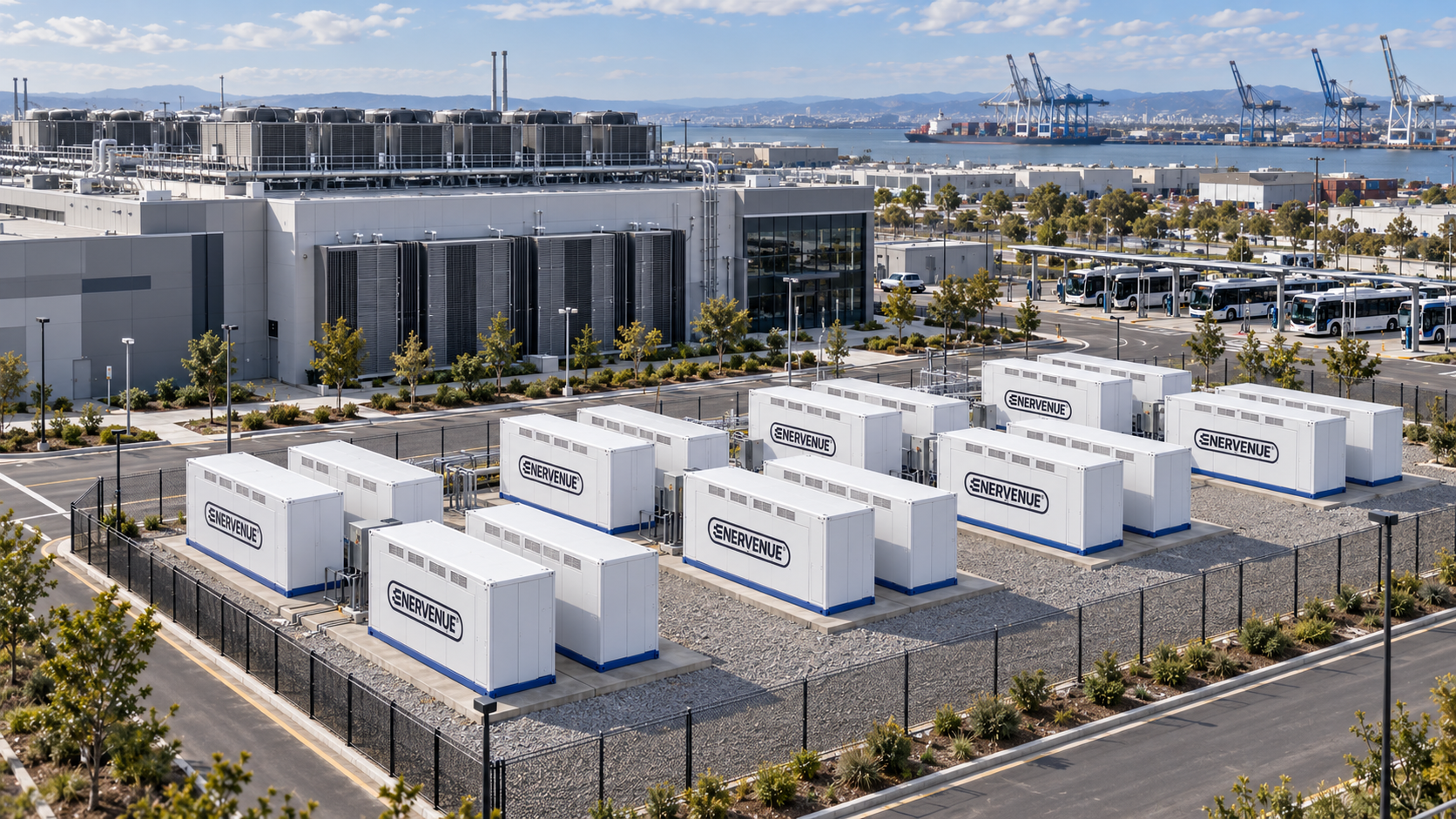
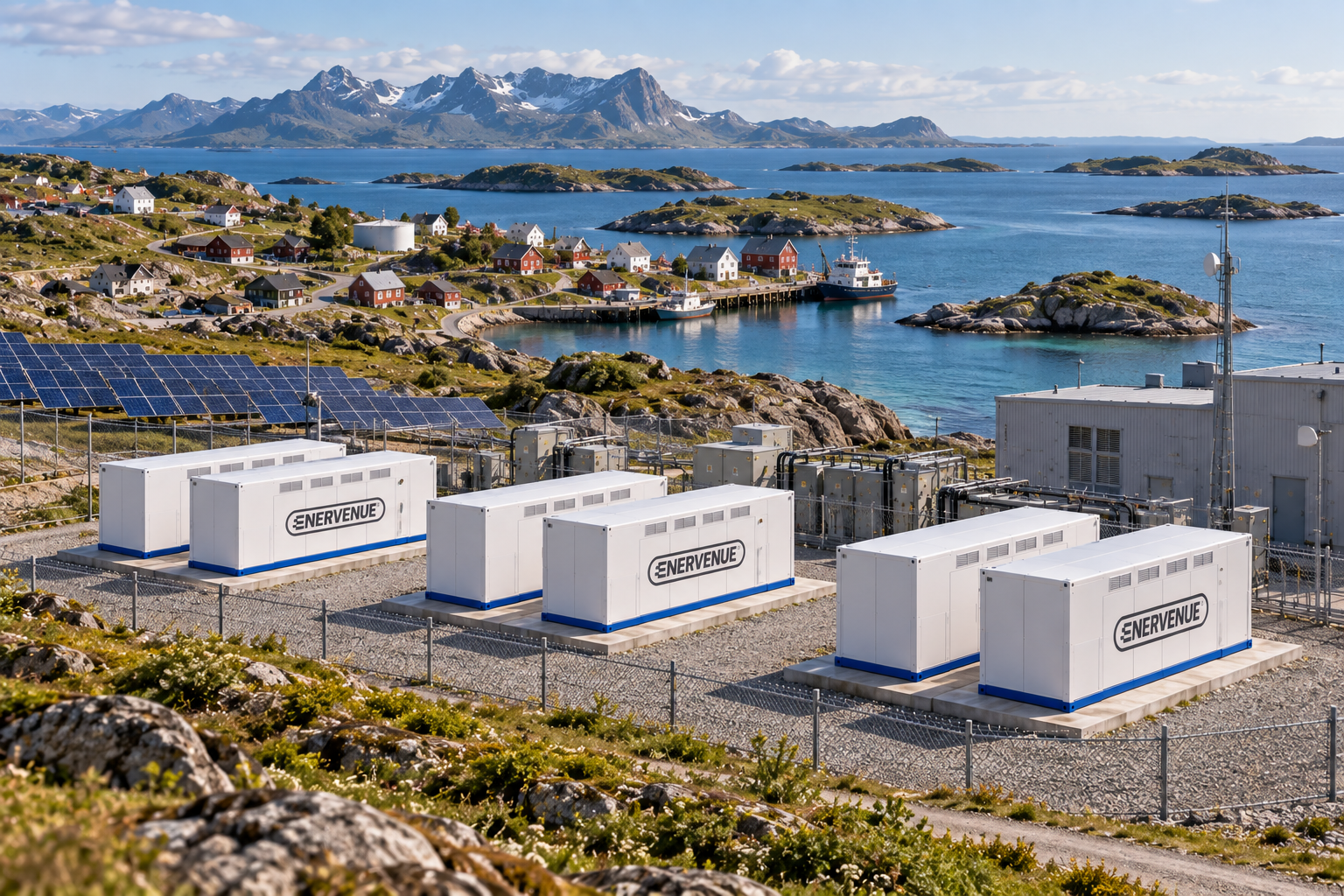
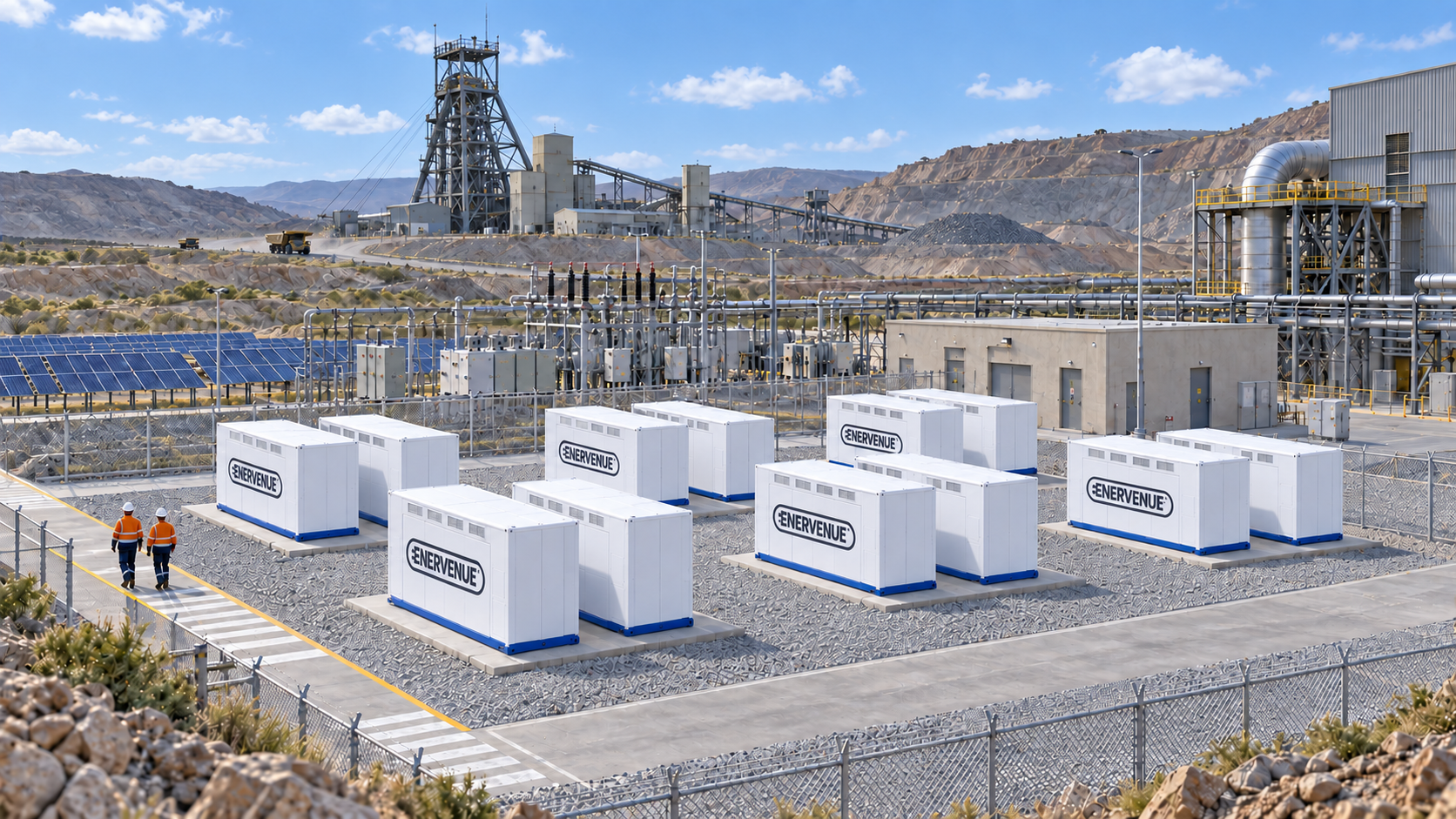
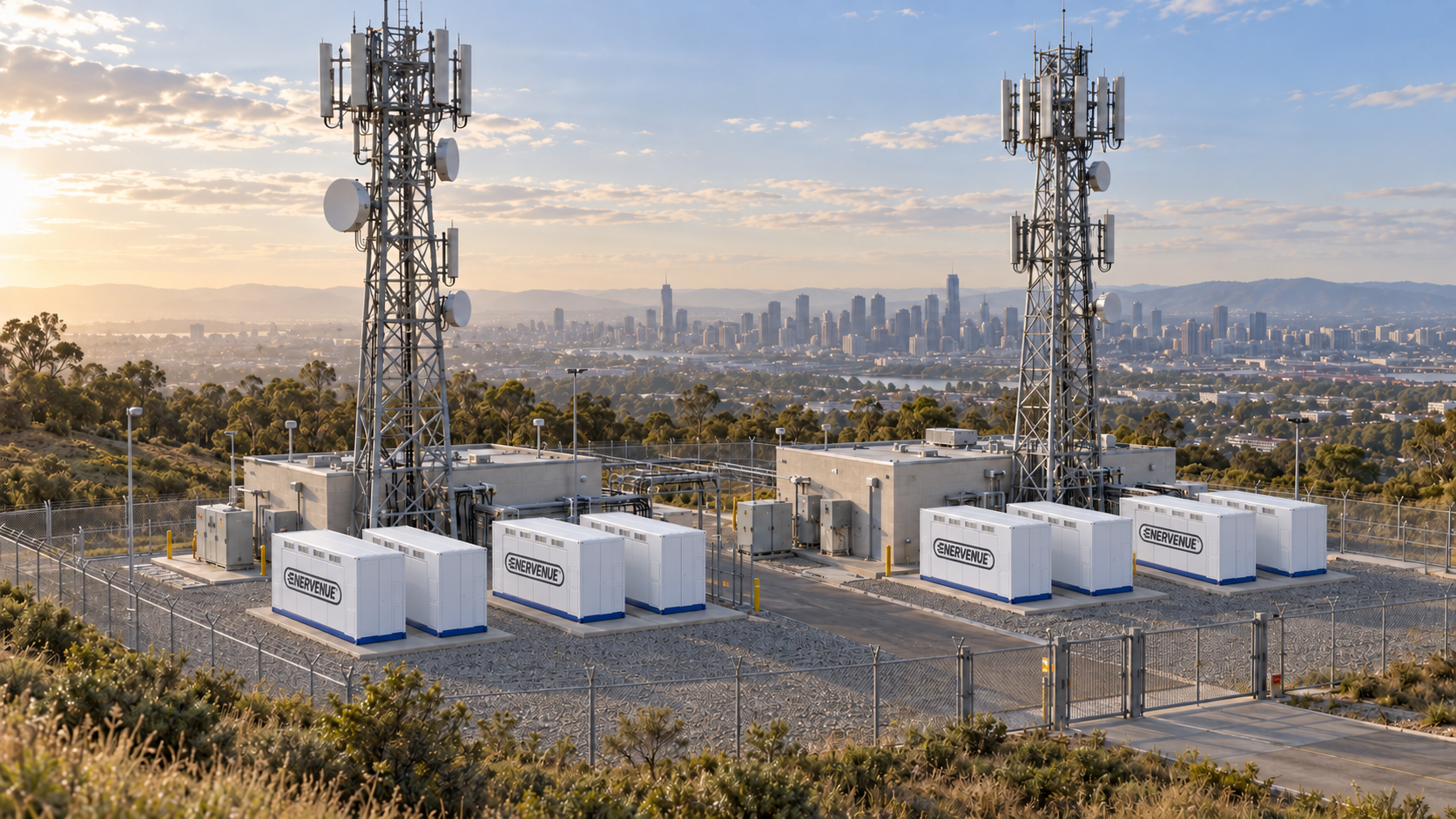
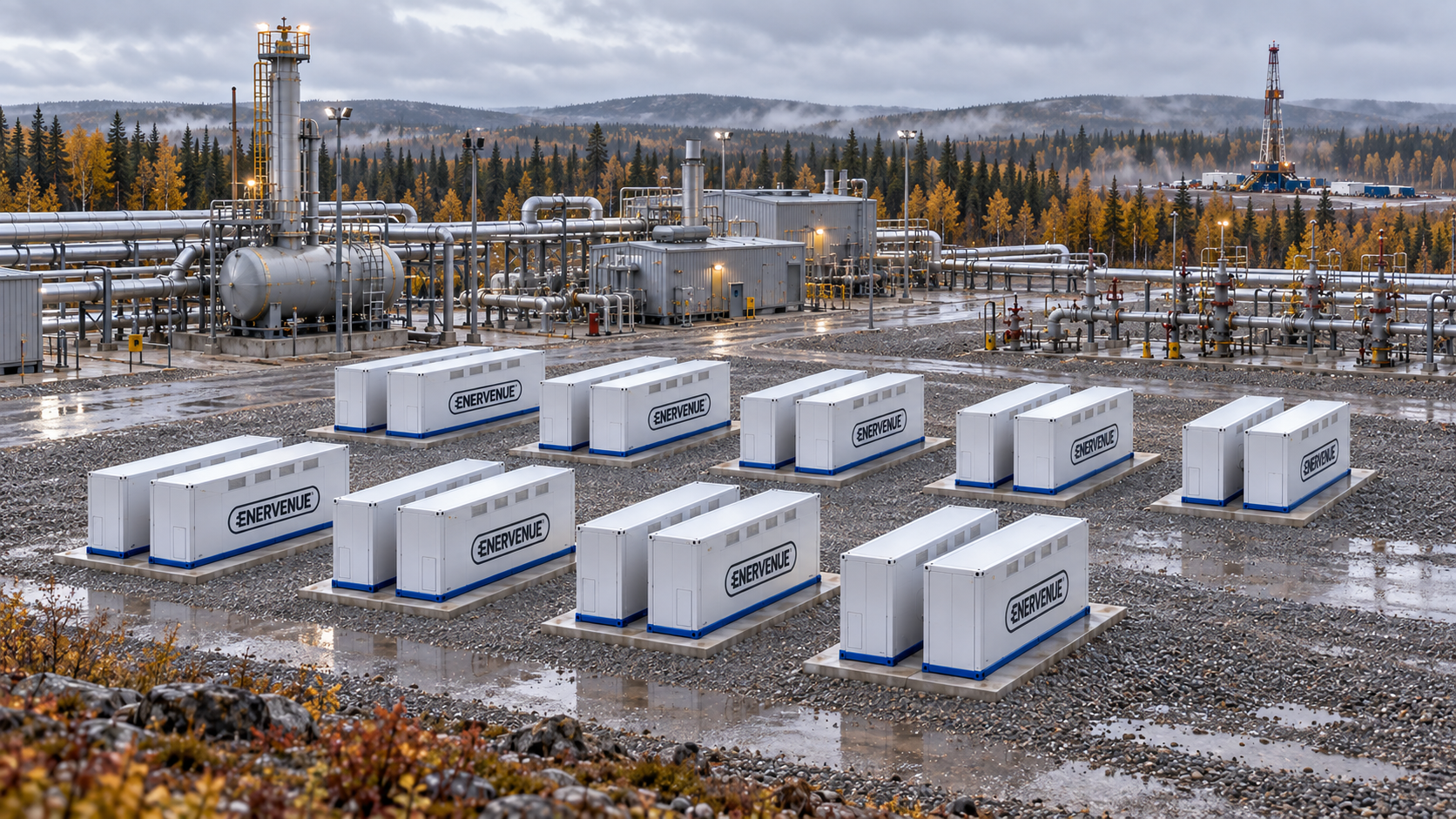
Illustrative scenario built on published industry data and EnerVenue's product specifications. It does not describe a specific EnerVenue customer or installation.
Join industry leaders who turn to our briefing for insights and analysis on storage technology, market shifts, and real-world deployments.
— Early access to industry research & whitepapers
— Market insights on energy storage trends
— Technology deep-dives from our engineering team