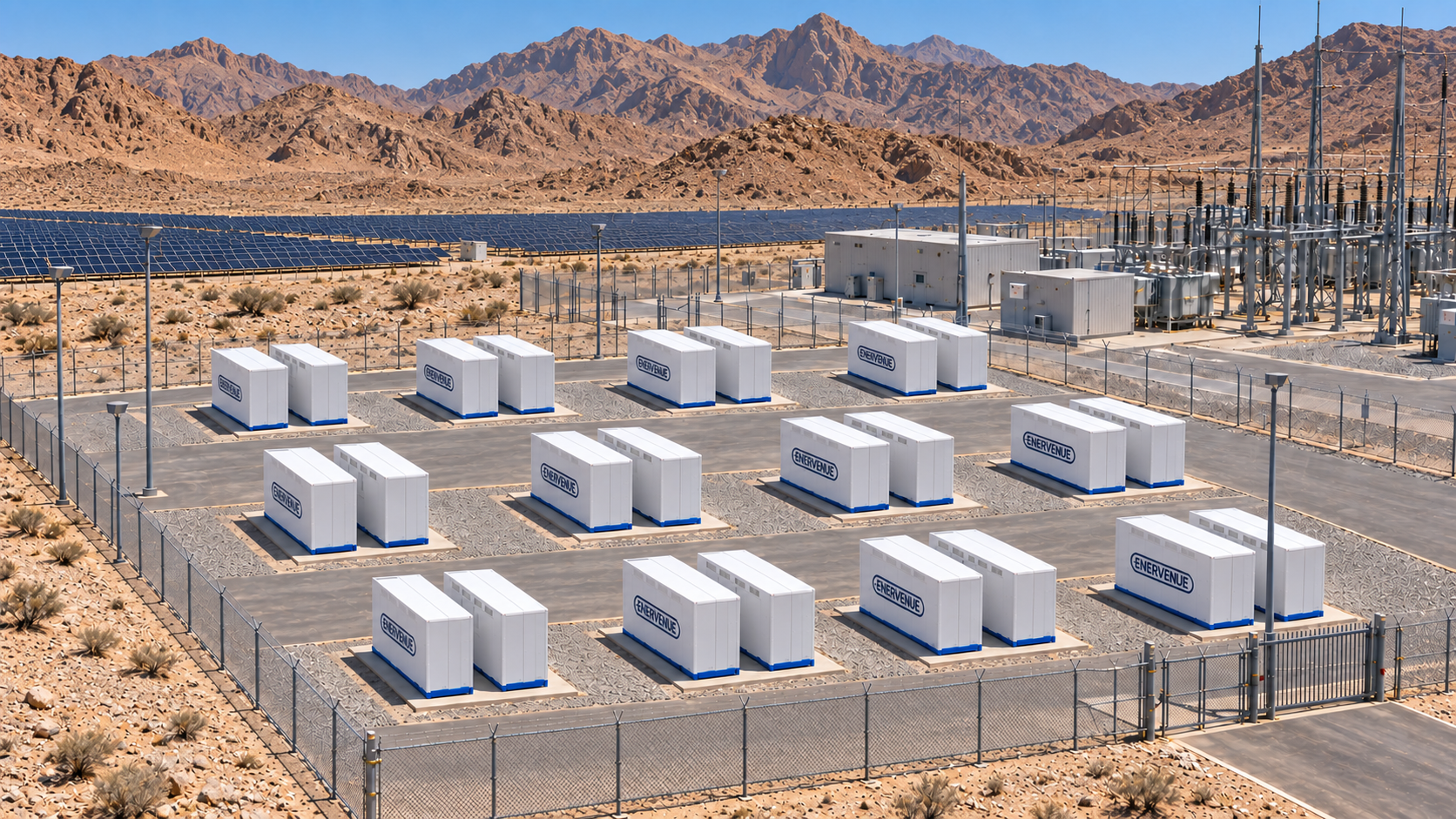
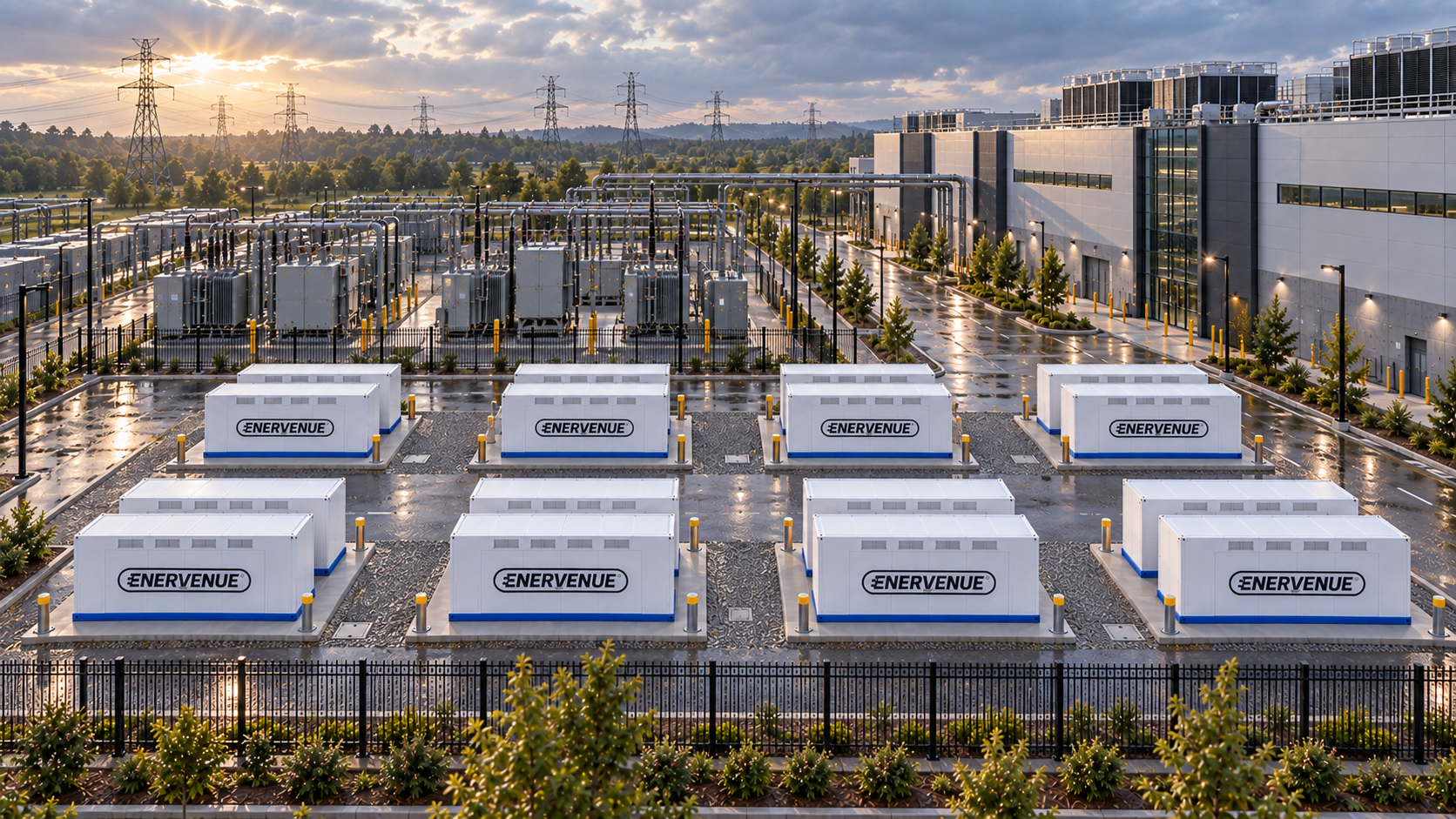
Data centres used about 4.7 per cent of US electricity in 2024 and are projected at 9.5 to 15.3 per cent by 2030 (US Department of Energy). The wire is the constraint: only 50 to 60 per cent of capacity scheduled for the next two years is expected to arrive on time, and of the behind-the-meter generation announced to get round the queue only 2.2 per cent was operating by mid-2026 (Congressional Research Service, September 2026). Utilities now offer faster connections in exchange for flexibility, and analysis shows that bringing your own storage plus a flexible connection can cut the wait by three to five years. Meanwhile every hall already holds a battery, the UPS, doing nothing for 99 per cent of its life, replaced every five to ten years, and sited under a fire code written for a chemistry that burns.
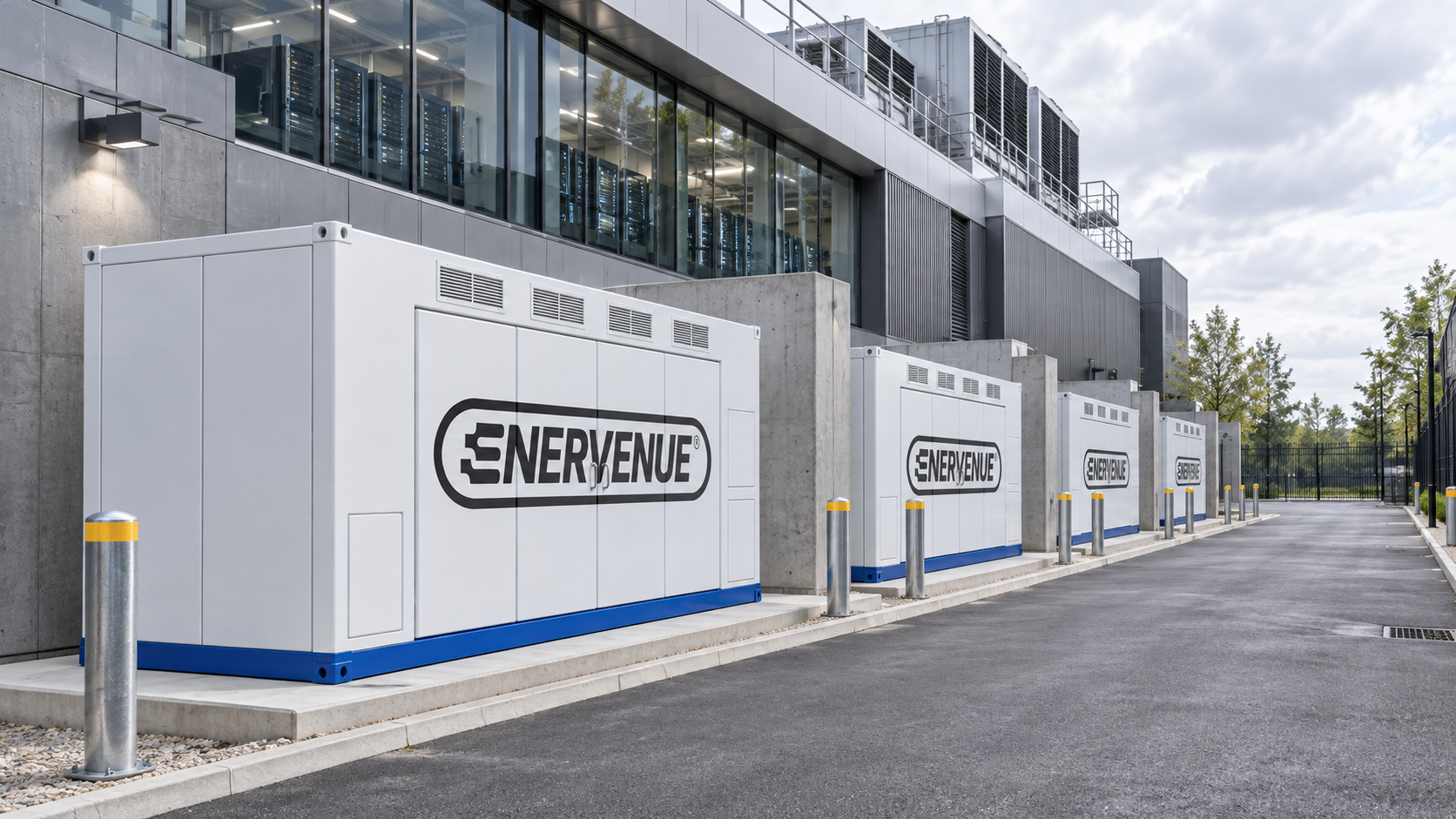
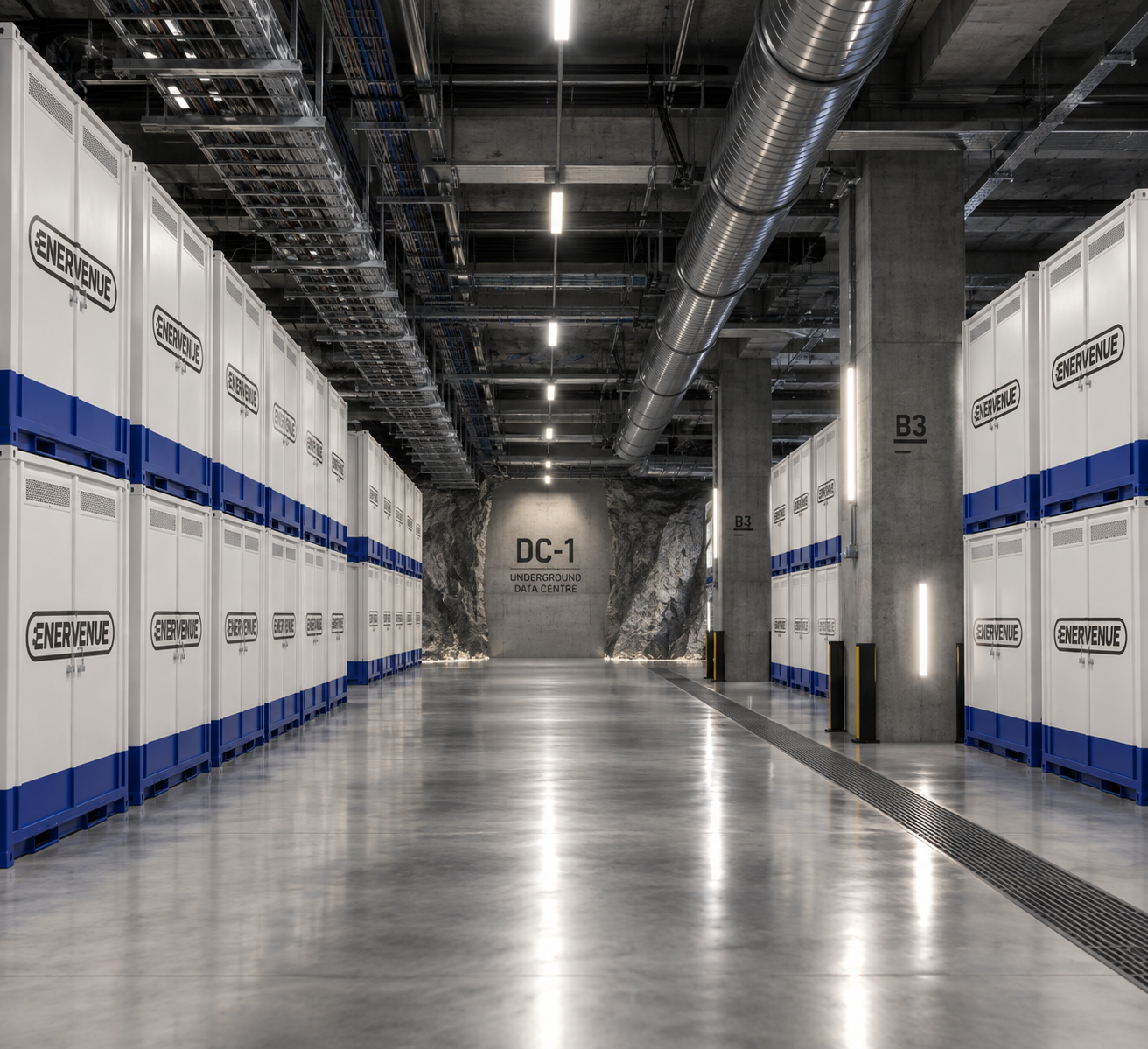
Two jobs, one chemistry. At campus level, behind-the-meter storage charges when the site is light and dispenses through the ramp, so the connection the campus already holds serves a larger campus than it was rated for, and the same asset offers the utility the flexibility that shortens the queue. Inside the building, the Energy Cube is designed for in-building and data centre duty: 108 kWh at 432 Vdc, natural-air cooled, backup power at rack scale for enterprise and internet data halls, with zero risk of fire from thermal runaway beside the servers. Both run on a cell designed for 30,000 cycles and 30 years with no scheduled augmentation, so the battery is on the campus's depreciation clock rather than the hardware refresh cycle. We are direct about scope: sub-second load smoothing behind AI training clusters is a different job, and a higher-rate cell on our roadmap is aimed at it.
Compute that scales this year rather than in 2029. A connection negotiation with something to offer the utility. A UPS bank that is still on its first set of batteries when the servers are on their third generation. And a battery the fire authority can say yes to inside an occupied building.
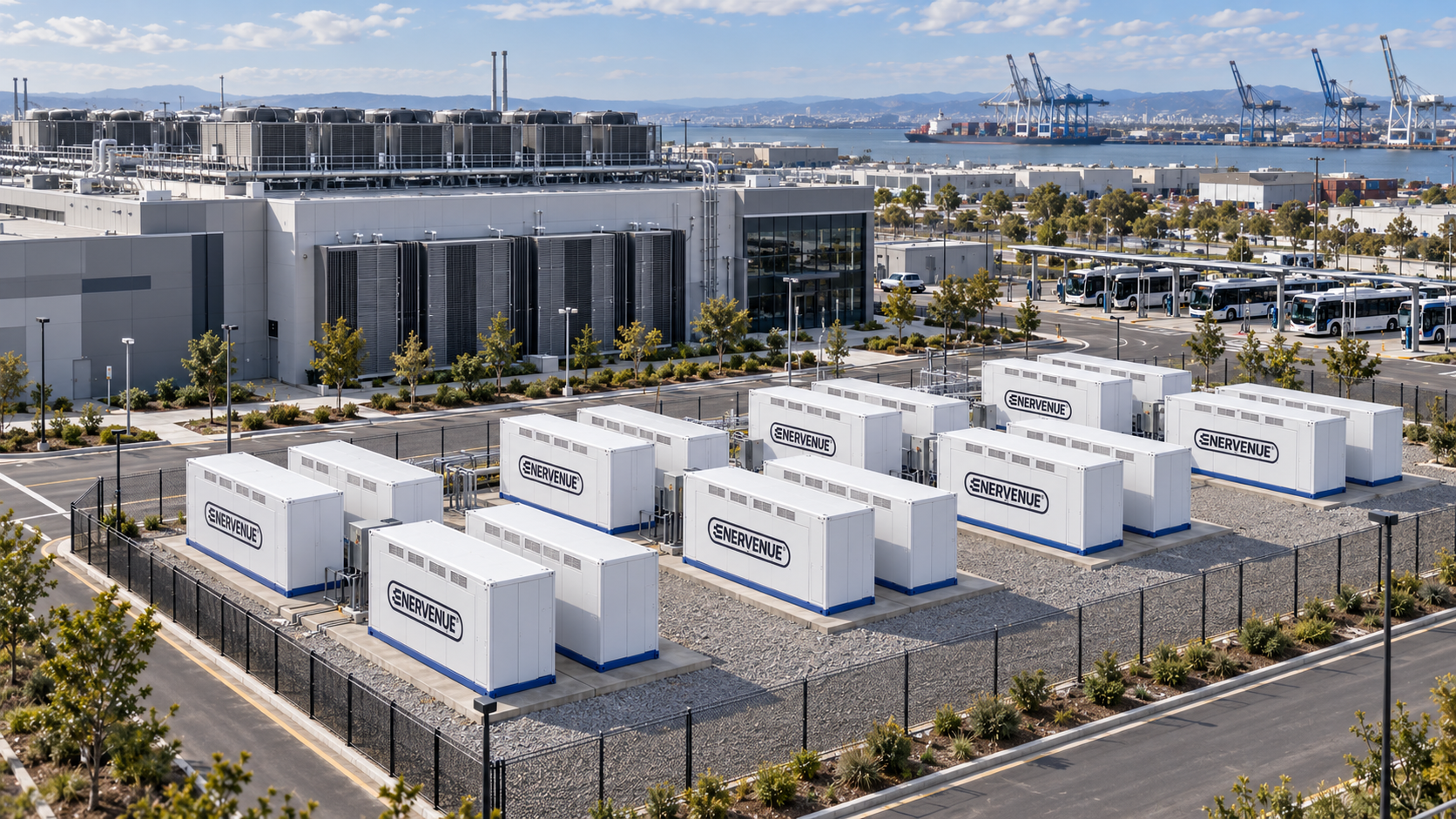
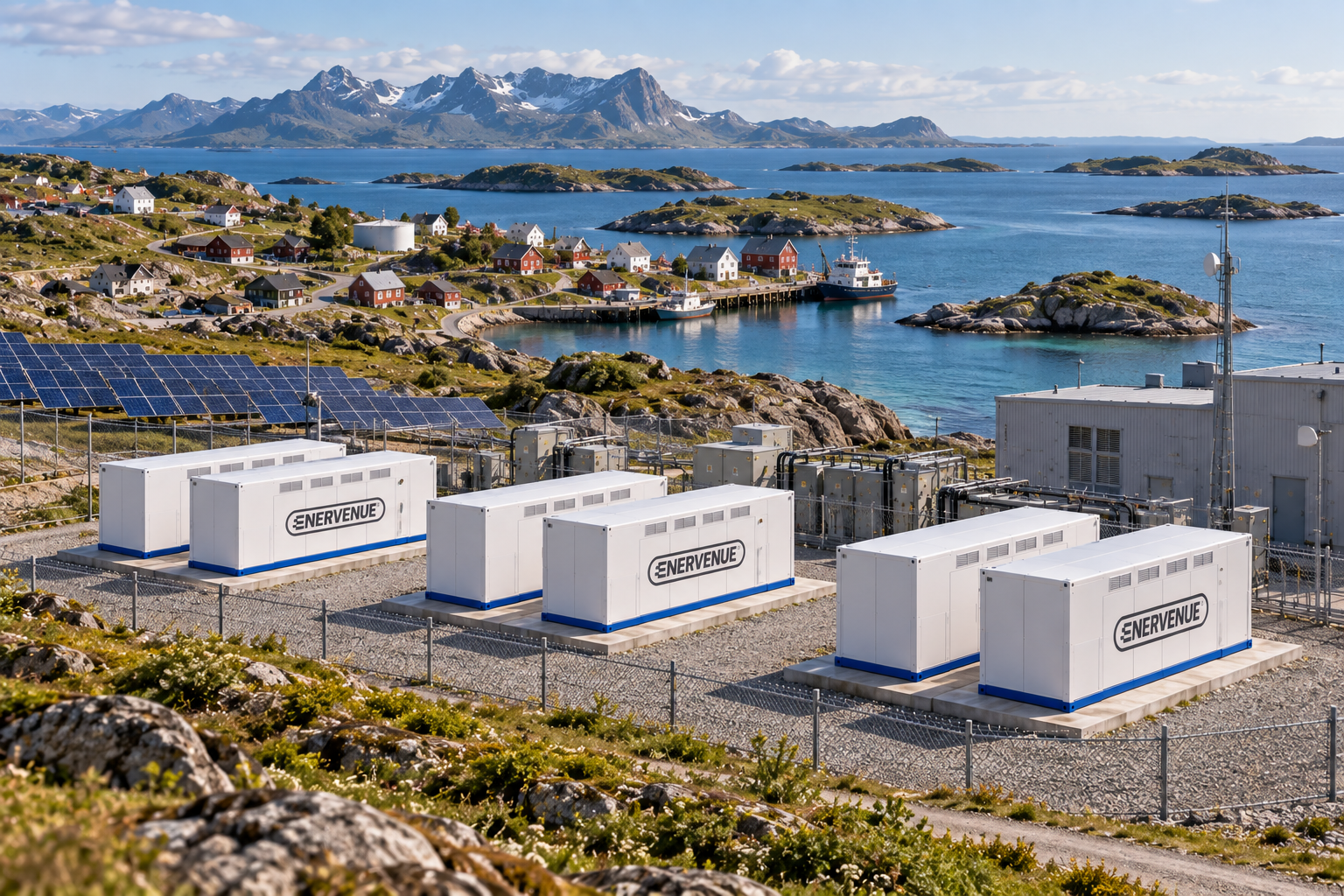
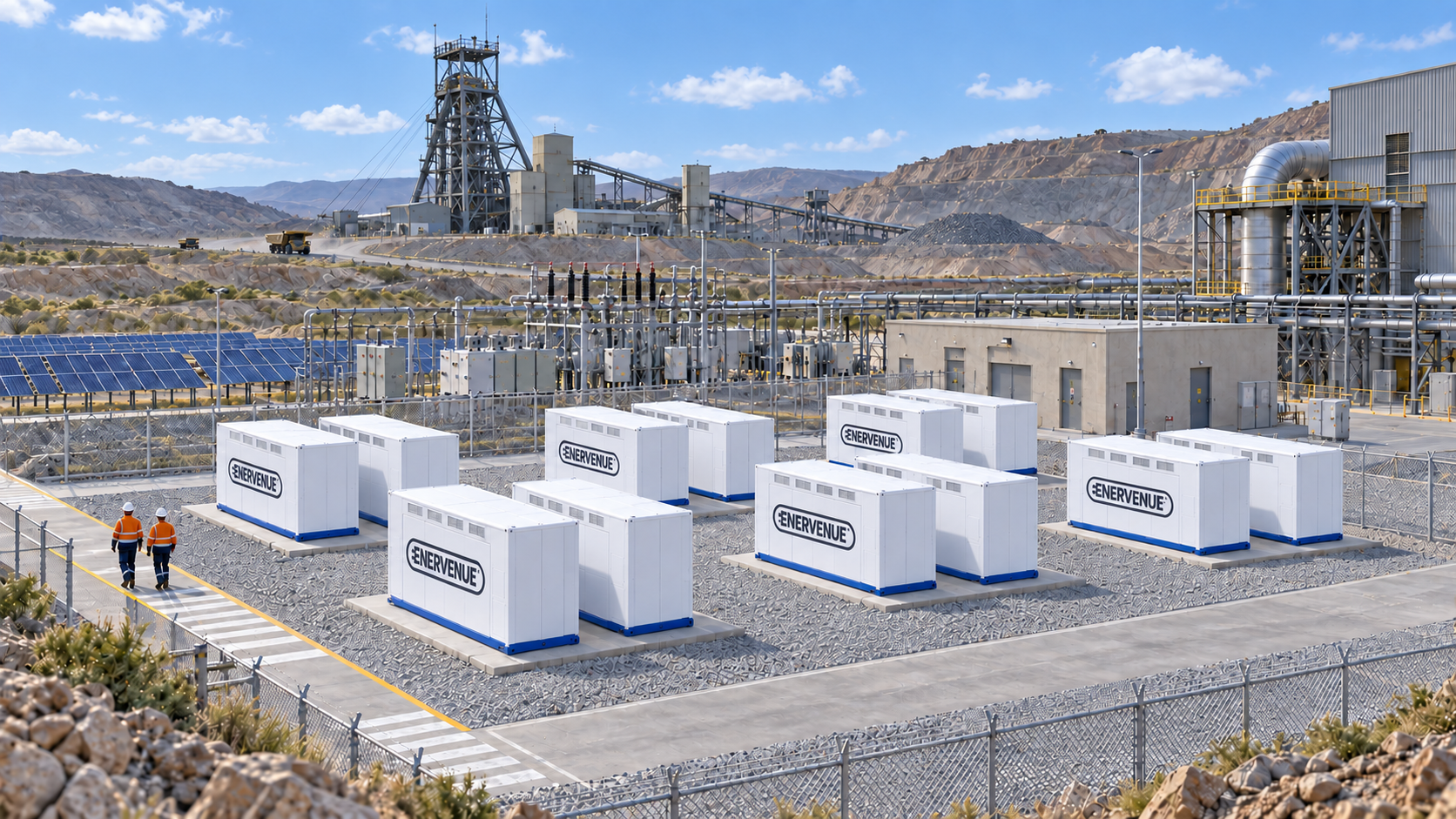
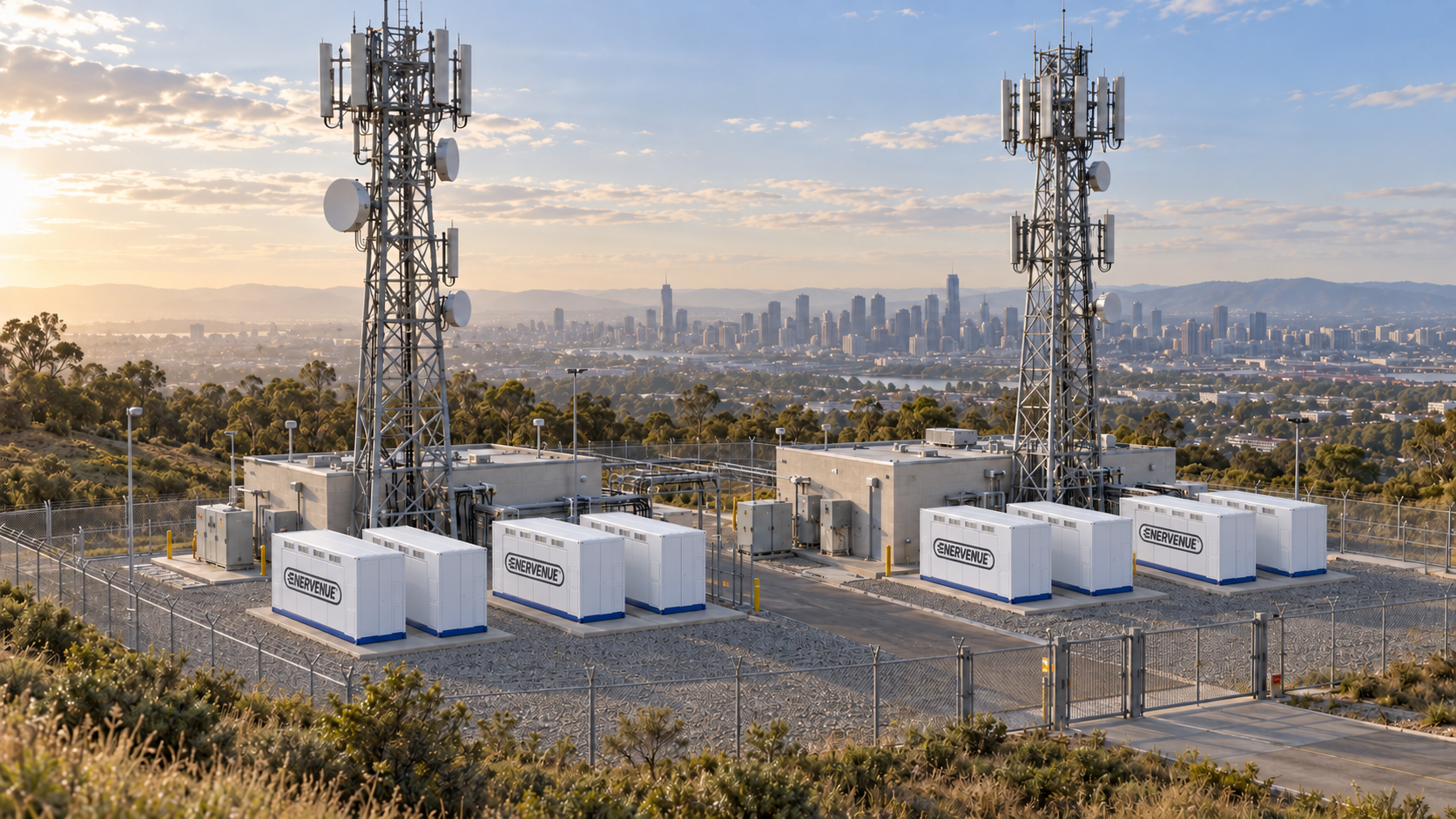
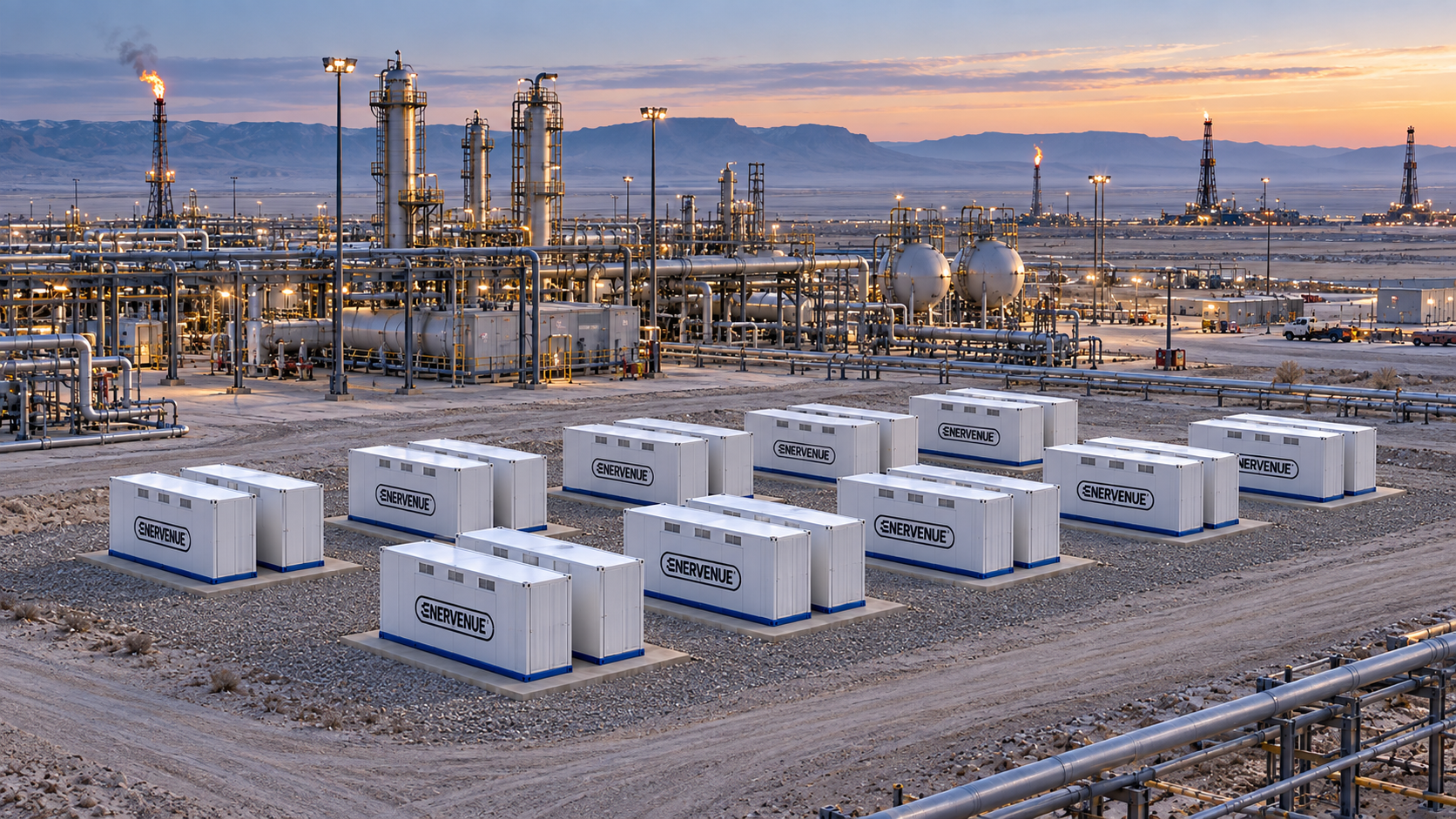
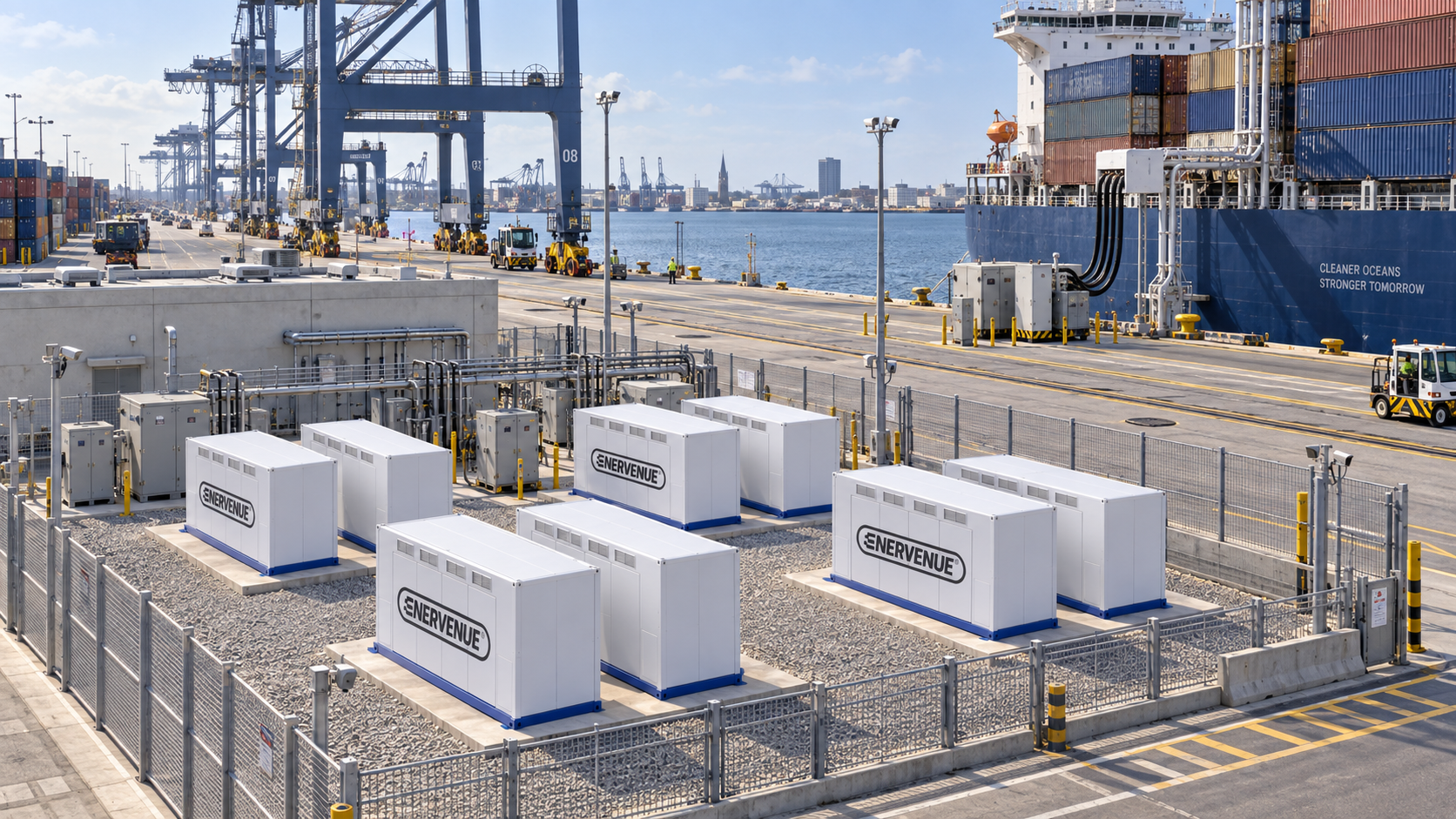
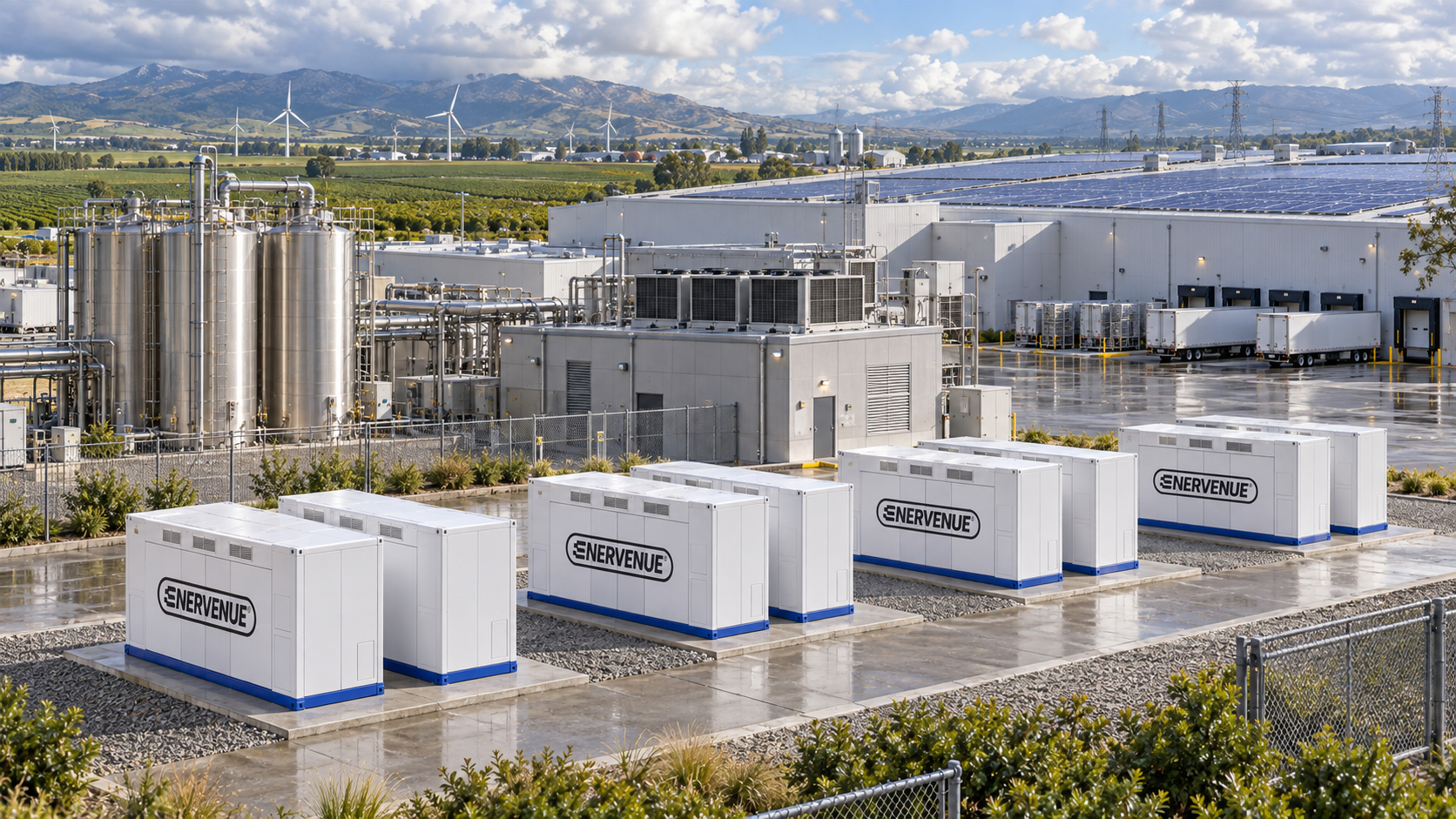
Illustrative scenario built on published industry data and EnerVenue's product specifications. It does not describe a specific EnerVenue customer or installation.
Join industry leaders who turn to our briefing for insights and analysis on storage technology, market shifts, and real-world deployments.
— Early access to industry research & whitepapers
— Market insights on energy storage trends
— Technology deep-dives from our engineering team