
Products
This is what 30 years of endurance looks like commercially.
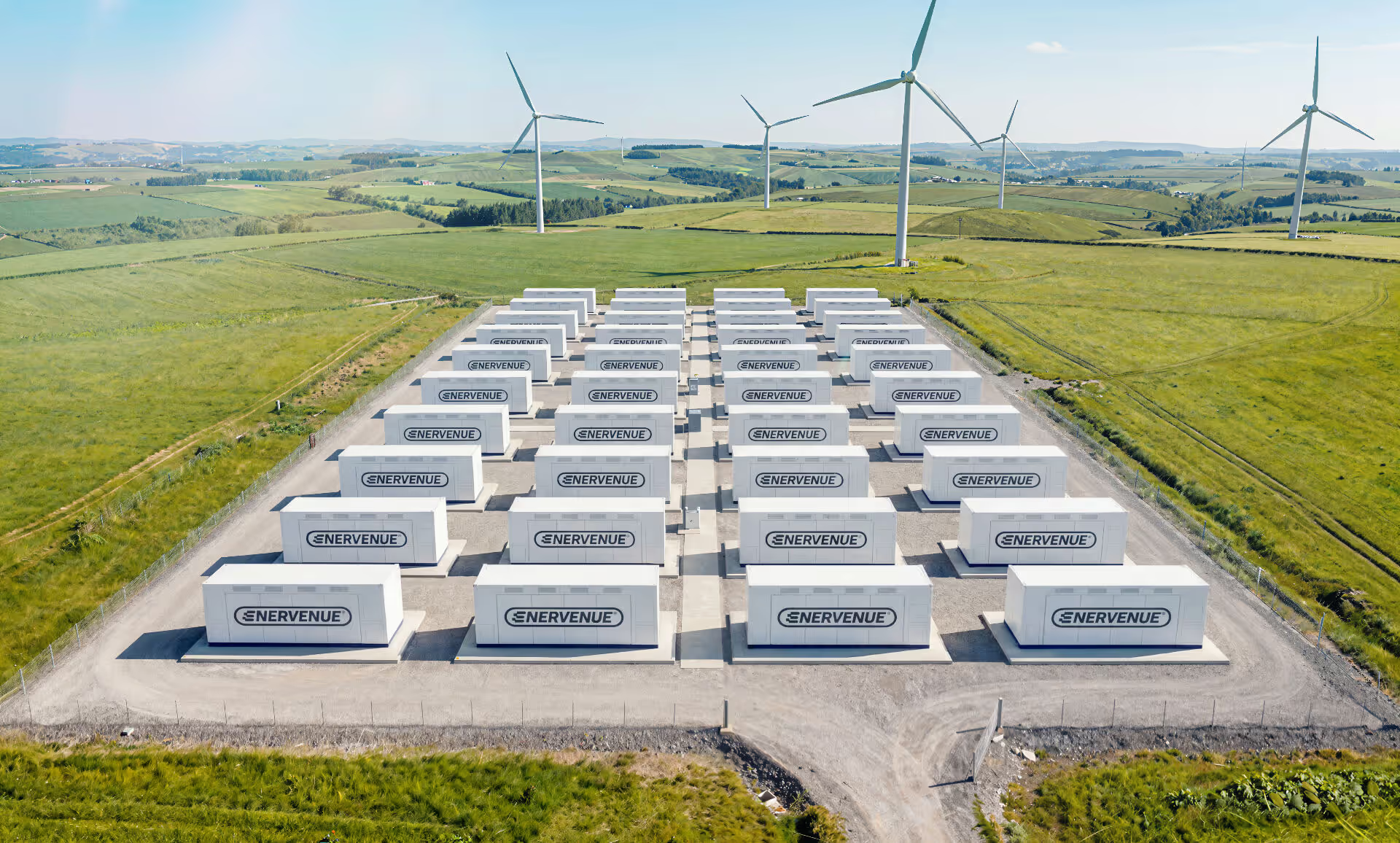
Two products. One integration model. No augmentation. No complex thermal management. No auxiliary fire suppression. Thirty years without major intervention.
Request a project consultationThe Products
The ideal building blocks.
Ready to ship.
Energy Rack™
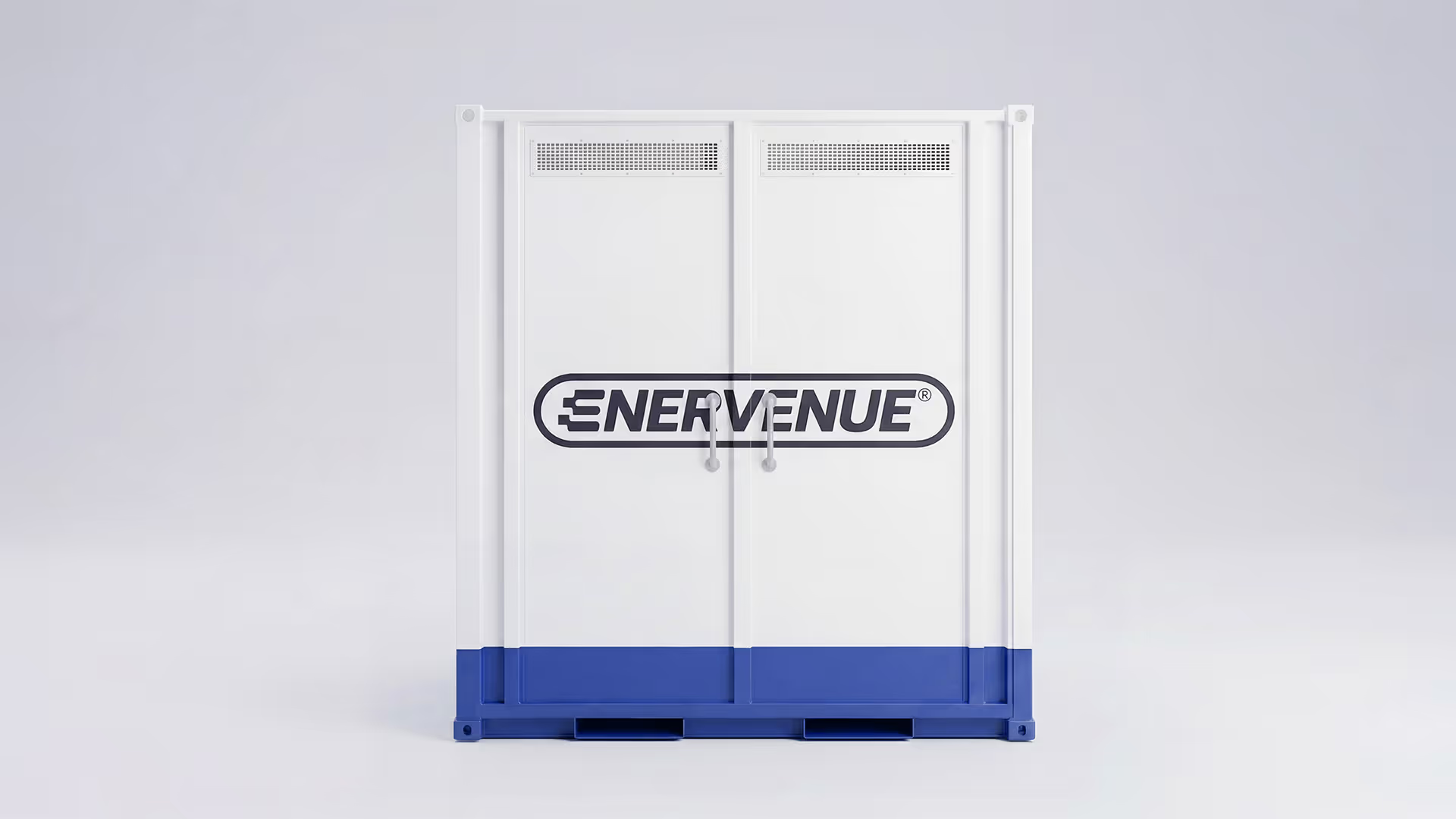
The configurable unit. 150 kWh at 1500 Vdc. Ships pre-integrated with AMCs, BMS, and all connections. Stackable to three rows high. Compatible with both 1500 Vdc and 1000 Vdc systems.
Integration
The choice is yours.
The Energy Rack is a DC block that can be configured according to unique project needs via the Energy Venue design. The Energy Prism is a simple solution that speeds deployment.
Two paths. One platform.
Energy Venue™
The configurable AC solution.
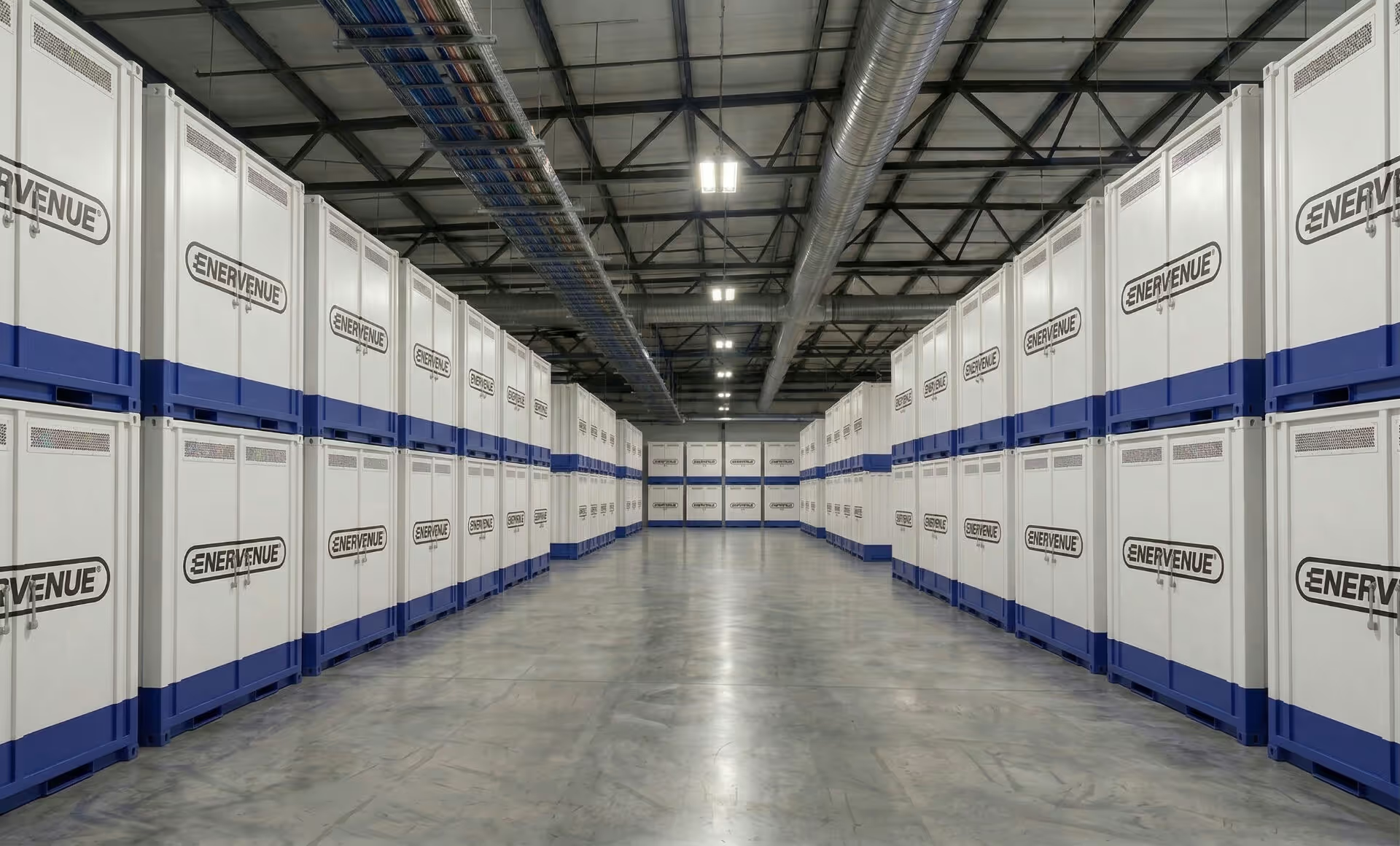
Energy Venue™ is an innovative building concept designed to enable cost-effective, turnkey deployment of grid-scale energy storage. Purpose-built for infrastructure-grade systems, Energy Venue provides a flexible platform for energy storage across a wide range of energy markets. Energy Racks can be stacked up to three levels high to optimize footprint efficiency, especially important for multi-megawatt-hour deployments. PCS equipment can be co-located using a distributed or centralized approach. This modular architecture reduces engineering complexity, installation labor, and integration costs — helping developers and integrators bring projects online faster and more efficiently.
Turnkey deployment.
Grid-scale flexibility.
Modular by design.
Energy Prism™
The containerized DC block.
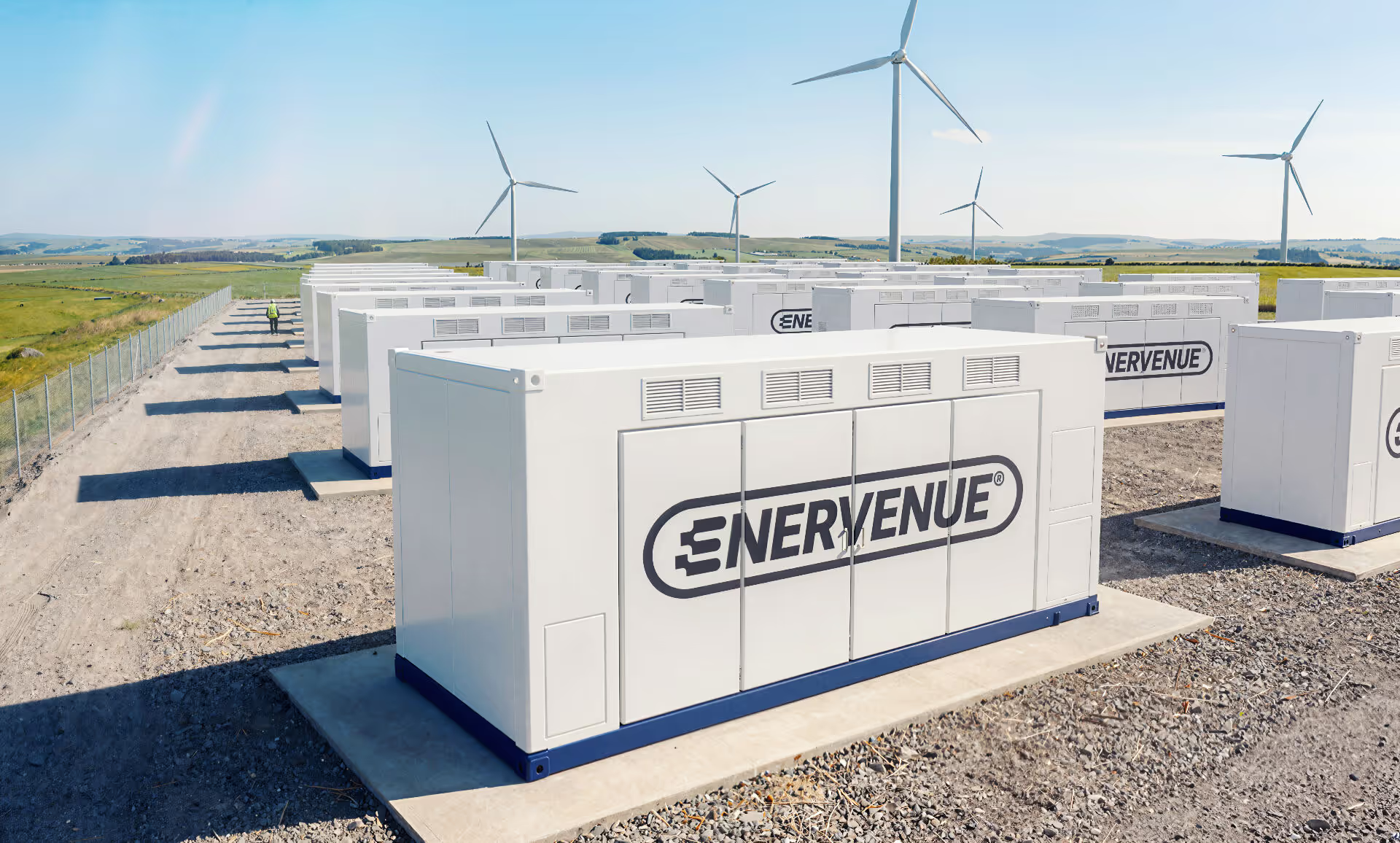
Energy Racks can be integrated into the Energy Prism — a container-based solution for design-and-drop ease. Integrators can connect power conversion systems (PCS) to complete an AC system while using their preferred partners and technologies. Unlike conventional container solutions, fire suppression systems are not required due to the AMC's inherently safer chemistry. System heating and cooling is not required either, reducing sub-system components, maintenance requirements, and unnecessary points of failure.
The Economics
On a 100 MWh project, EnerVenue costs up to 25% less.
25%
Lower total cost of ownership
0
Augmentation events required
93.2%
State of health at year 20
Four Dimensions
The economics work across four dimensions. Each one compounds the next.
Total capital at day zero
A 100 MWh project requires 112 MWh of installed EnerVenue capacity. A comparable conventional system requires between 127 and 219 MWh to deliver the same contracted output, because degradation must be corrected through augmentation. The total capital required at day zero is lower with EnerVenue.
OpEx across the asset life
No complex thermal management systems. No fire suppression contracts. No augmentation phases. Conventional storage requires up to three augmentation events over 20 years, each a significant capital and operational disruption. EnerVenue requires none.
Revenue at year 20
93.2% state of health. The asset holds its contracted capacity for the full project life. Conventional storage reaches 65.6% by year 20, progressively eroding the revenue the project was financed to deliver.
Time to market
No fire suppression infrastructure means faster permitting and an earlier commissioning date. For data center operators, it also means the storage system can be located inside the facility rather than adjacent to it.
Metric
EnerVenue
Conventional
Required capacity at day zero
112 MWh
127 to 219 MWh
Augmentation phases
None
Up to 3 over 20 years
Total cost of ownership (20yr)
~25% lower
—
State of health at year 20
93.2%
65.6%
Effective cost per EoL MWh
Up to 30% lower
—
Source: Storlytics Battery Score Sheets. Two independent use-case simulations, augmentation and overbuild deployment strategies. 3% discount rate. 100 MWh end-of-life requirement, 25 MW, 20-year project life.
EnerVenue
Required capacity at day zero
112 MWh
Augmentation phases
None
Total cost of ownership (20yr)
~25% lower
State of health at year 20
93.2%
Effective cost per EoL MWh
Up to 30% lower
Conventional
Required capacity at day zero
127 to 219 MWh
Augmentation phases
Up to 3 over 20 years
Total cost of ownership (20yr)
—
State of health at year 20
65.6%
Effective cost per EoL MWh
—
Source: Storlytics Battery Score Sheets. Two independent use-case simulations, augmentation and overbuild deployment strategies. 3% discount rate. 100 MWh end-of-life requirement, 25 MW, 20-year project life.
Ready to Deploy
Start with a conversation.
Spec sheets are available for download. For project enquiries, our team is ready to model your specific use case.
Born to Empower. Built to Endure.
Speak with an Advisor