
Article ·
July 30, 2026
EnerVenue | The Future Energy Outlook #2
Henning Rath
.jpg)
The energy industry has entered a more demanding era.
The last market cycle proved that storage can scale. The U.S. battery storage market installed a record 3.3 GW in the first quarter of 2026, and in Europe, the constraint is no longer whether storage gets built, but whether it can shift enough renewable energy into the hours when the system actually needs it. (Utility Dive / Wood Mackenzie / ACP, 2026; DW, 2026)
This market cycle will be judged differently.
Customers will still care about capacity, delivery timelines, and upfront cost. Those questions remain important, but they no longer define the full decision. The question that increasingly does begin to define the issue, is whether the storage being installed today can continue performing through years of high utilisation.
That is the durability question. It determines how much energy an asset can deliver over its economic life, not simply how long it remains installed, and as storage becomes part of the energy infrastructure that customers depend on, that raises the standard. The real test starts in the years after commissioning, when cycling, degradation pressure, safety, augmentation, and utilisation all shape the economics customers actually live with.
Cycle life is the clearest signal of that shift, and the market’s largest player has just confirmed it. When CATL launched its TENER Sodium system in June, it positioned the product around 15,000 cycles and a 25-to-30-year service-life, and its own storage CTO told the room that the sector has moved beyond scale alone, with success now measured by long term value . When the biggest manufacturer in the world reframes the conversation around endurance, endurance has become a procurement issue. (CATL / CarNewsChina, 2026)
It also raises the next question, if 15,000 cycles is becoming the benchmark for long-life storage, what should customers expect from a system they intend to rely on every day, mutliples times a day, for decades? A 30,000-cycle asset gives customers a different operating model. It supports higher utilisation, reduces augmentation exposure, strengthens warranty confidence, and gives financiers a clearer view of lifetime risk. The decision made at procurement carries through the life of the project; degradation, downtime, safety exposure, and operating performance become economic outcomes.
That is why EnerVenue was built around endurance from the beginning.
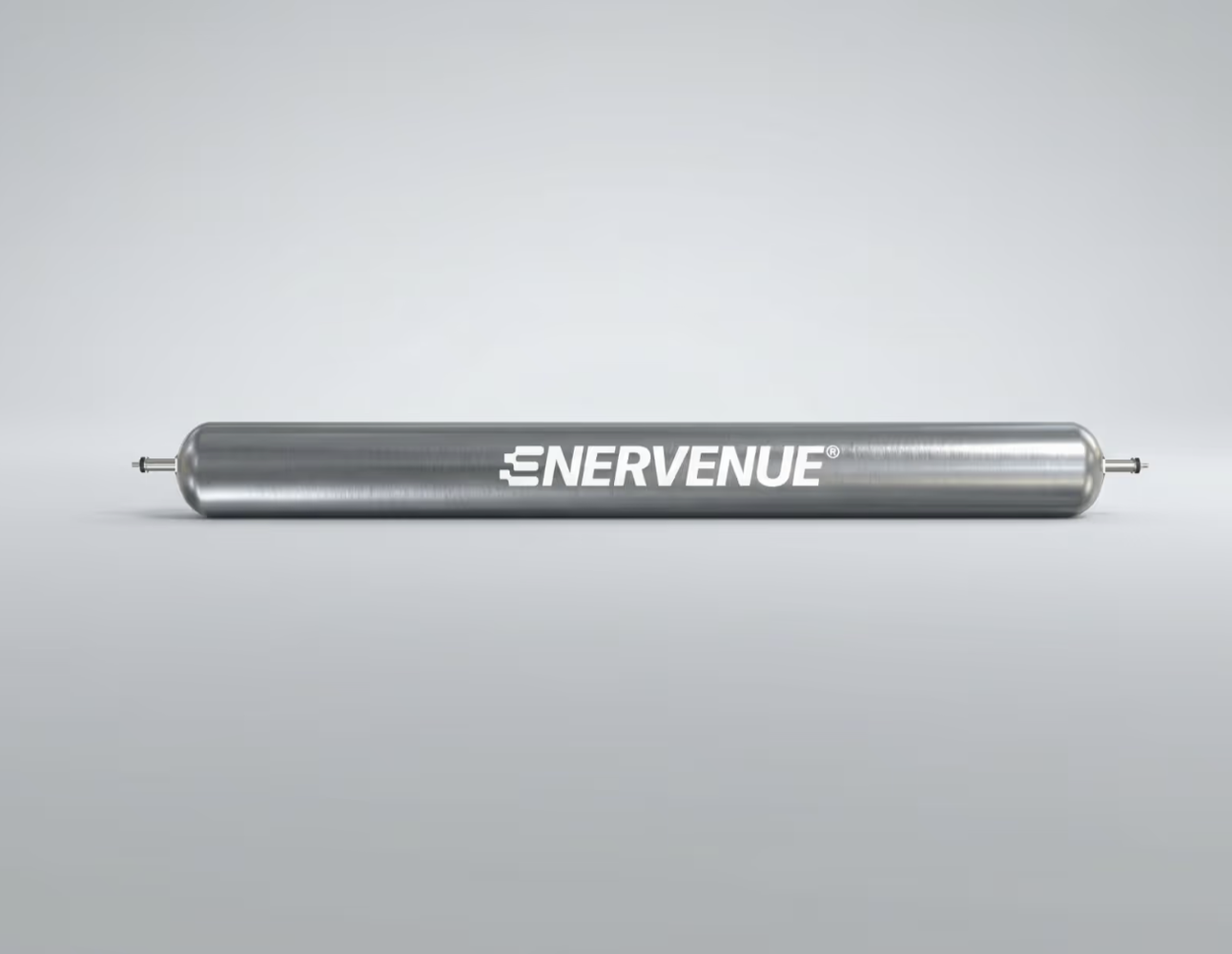
Our fourth-generation Aqueous Metal Cell (AMC) architecture is designed for 30,000 cycles, three cycles per day, and a 30-year design life, on a water-based, non-flammable chemistry. For customers, that is more than a performance claim, it is a different planning basis: infrastructure-grade energy storage built for high utilisation over decades, rather than a short-term asset optimised around initial deployment.
And it is already operating in the field. Our first fourth-generation system, commissioned with Towngas near Changzhou this spring, is now cycling continuously under real conditions, pairing on-site renewables with electric bus charging across two to four hour periods. That is where a durability claim has to be settled. A datasheet describes endurance. A system in operation demonstrates it.
The same logic applies to manufacturing.
Customers need confidence that a technology can be produced reliably, economically, and at the scale their projects demand. The Financial Times recently reported that many western battery companies are increasingly turning to Asian manufacturing capacity to scale more efficiently and avoid the capital intensity that has challenged western battery manufacturing. That is a market signal worth paying attention to: manufacturing strategy is now part of customer confidence. (Financial Times, 2026)
This is why our high-volume manufacturing hub in Changzhou is strategically important.
Our first automated production line is advancing toward 250 MWh of capacity, with a path to 1 GWh and then multiple gigawatt-hours as demand scales. For customers, this is more than a factory update. It is evidence that EnerVenue is building the production discipline, supply-chain depth, and scale path required to move from validated technology to deployable infrastructure.
The first wave of energy storage proved the market could scale.
The next wave will be judged by how long that performance can be sustained.
As storage becomes part of critical energy infrastructure, customers will judge systems by what they continue delivering in year ten, year twenty, and beyond.
That is where durability becomes the bottleneck. It is also where EnerVenue intends to lead.
Henning Rath
CEO, EnerVenue
EnerVenue appoints Maryann Xu as Chief Financial Officer
Xu brings more than 25 years of senior leadership experience across global finance, operations, people leadership, and capital strategy, including executive roles at Walmart China, Fonterra Greater China, Ernst & Young, L’Oréal, Coca-Cola, and MediaMarkt. She will be based at EnerVenue’s high-volume manufacturing hub in Changzhou, where the company is scaling production ahead of the completion of its 250 MWh production line and planned 1 GWh expansion.
Her appointment strengthens the financial infrastructure behind EnerVenue’s next stage of growth: disciplined capital allocation, risk management, operating controls, and the finance systems required to support multi-gigawatt expansion of the company’s fourth-generation Aqueous Metal Cell platform.
Technology proves what is possible. Financial discipline helps make it scalable.
.jpg)
Latest from the Industry Hub
What Is Thermal Runaway? A Battery Safety Explanation
Thermal runaway is when a battery overheats past the point of no return. This short video breaks down what happens inside a lithium-ion cell when temperatures spiral and why those fires can only be contained. EnerVenue's battery has zero fire risk in these situations (ensuring zero risk of thermal runaway)
→ Read more

How The Aqueous Metal Cell Technology Works
Nickel-hydrogen batteries have operated in space for more than four decades. They power the International Space Station. They powered the Hubble Space Telescope. NASA and aerospace engineers chose them because they needed batteries that could cycle tens of thousands of times in extreme conditions without degrading and the chemistry delivered.
→ Read more
Explore the Industry Hub
New to EnerVenue? Learn what we build at About EnerVenue.
The energy landscape is changing fast. Stay ahead.
Join industry leaders who turn to our briefing for insights and analysis on storage technology, market shifts, and real-world deployments.
— Early access to industry research & whitepapers
— Market insights on energy storage trends
— Technology deep-dives from our engineering team
Related Articles

Born to Empower. Built to Endure.
Speak with an Advisor