
Article ·
March 18, 2026
AI Energy Demand: How Data Centers Are Reshaping Electricity Markets
Henning Rath, CEO, EnerVenue
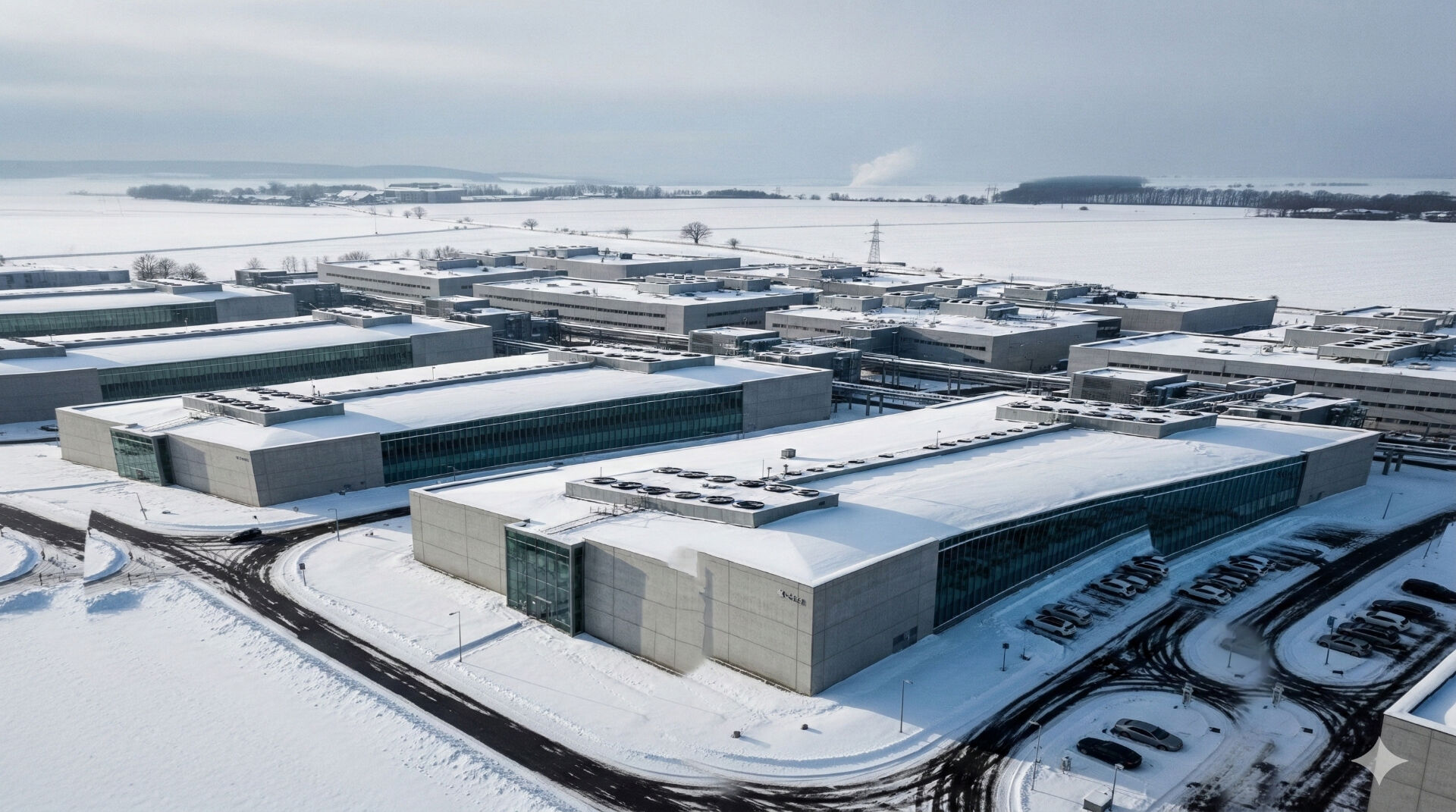
Artificial intelligence is often described as the next wave of digital innovation. From the perspective of electricity markets, however, it represents something more fundamental: a structural redesign of load behavior and infrastructure requirements.
Historically, electricity demand growth in developed markets was gradual and largely predictable. Utilities modeled incremental increases in consumption, adjusted generation portfolios accordingly, and expanded transmission networks over multi-decade planning horizons. Even as cloud computing scaled, data center growth remained within parameters that existing grid architectures could absorb.
AI changes those assumptions.
Large-scale AI data centers introduce concentrated loads that can exceed hundreds of megawatts per campus, often deployed within compressed timelines that strain traditional interconnection and transmission planning cycles, a trend reflected in U.S. interconnection queue data published by the Department of Energy. More significantly, AI workloads combine sustained high baseline demand with rapid ramp behavior driven by training cycles and computational intensity. The result is not simply higher consumption, but a structurally different demand profile.
Electricity markets are no longer accommodating linear growth. They are adapting to dynamic acceleration, as documented in the International Energy Agency's Electricity Market Report 2024.
Load Acceleration and Geographic Concentration
The most immediate challenge posed by AI infrastructure is scale. Utilities across multiple regions are receiving gigawatt-scale interconnection requests clustered within narrow geographic corridors. These concentrations of demand require substation expansion, transmission upgrades, and generation portfolio adjustments that were not contemplated in earlier planning models.
However, total load is only part of the equation. Geographic concentration increases the consequences of localized instability. When hundreds of megawatts of high-value digital infrastructure depend on a single regional grid node, reliability margins narrow considerably.
Regions capable of absorbing this demand without compromising stability are positioned to attract additional digital capital. Regions constrained by transmission bottlenecks or insufficient flexibility risk losing future AI investment to more adaptable markets.
Electricity infrastructure is increasingly shaping where digital economic activity can grow and thrive.
Ramp Rates and the Physics of Volatility
AI workloads introduce a second structural shift: increased ramp intensity. Training clusters and high-performance computing operations can generate rapid changes in load over short intervals, requiring balancing resources capable of flexible response.
Traditional grids were engineered around more predictable consumption patterns. While seasonal peaks and daily variations were expected, the frequency and magnitude of ramp events introduced by AI add new pressure to frequency regulation and voltage stability mechanisms—challenges analyzed in reliability assessments by the North American Electric Reliability Corporation (NERC).
At the same time, renewable penetration continues to increase variability on the supply side, as highlighted in the International Energy Agency's Electricity Market Report 2024. Electricity markets must now balance dual volatility: intermittent generation and dynamic high-density demand.
Under these conditions, flexibility becomes as important as capacity. The ability to respond quickly and repeatedly to load shifts is no longer optional; it is foundational to maintaining grid stability.
From Flexibility to Continuous Duty
Energy storage has emerged as a central balancing resource because it can absorb surplus generation, deliver dispatchable power during shortfalls, and stabilize frequency in real time, as emphasized in U.S. Department of Energy grid modernization reports. However, the AI era fundamentally alters the duty cycle imposed on storage systems.
Storage deployed in AI-intensive markets is not operating as occasional peak support. It is increasingly required to cycle daily, and in some cases multiple times per day, to manage ramp events and volatility.
This shift has material economic implications. Higher ramp rates translate into higher cycling intensity. Higher cycling intensity accelerates degradation in today's most common battery technologies. Accelerated degradation advances augmentation schedules. Augmentation introduces capital reinjection, operational coordination, and uncertainty into long-term reliability planning.
In AI-centric grids, degradation is not an abstract technical curve; it is a capital variable embedded within the economic model of digital infrastructure.
Infrastructure-Grade Endurance
If storage is to function as a reliability backbone in AI-driven electricity markets, it must be engineered for continuous duty over decades. Architectures developed for arbitrage markets were optimized for early deployment and limited cycling environments, making them a poor fit in an AI era that requires infrastructure-grade endurance.
High cycle life ensures that storage can sustain repeated dispatch without material capacity fade, preserving cumulative throughput and stabilizing effective cost per delivered megawatt-hour. Predictable degradation curves reduce augmentation frequency and simplify long-term financial modeling. Wide operating temperature tolerance and inherent safety characteristics reduce operational complexity and insurance exposure, particularly in high-density environments adjacent to digital infrastructure—considerations reflected in UL 9540A safety testing standards and insurer risk frameworks.
In AI-heavy markets, the value of predictability compounds. When data center uptime is directly monetized, the energy systems supporting those facilities must deliver stable performance without recurring intervention.
Endurance, therefore, is not a performance enhancement. It is a structural requirement of the AI age.
Capital Markets and Reliability Credibility
The reconfiguration of electricity markets under AI demand is also reshaping capital allocation. Investors evaluating digital infrastructure projects assess not only compute demand but power availability and stability. Where reliability is credible and supported by infrastructure-grade balancing resources, underwriting assumptions are strengthened and capital flows more readily—a dynamic reflected in infrastructure rating methodologies published by S&P Global.
Conversely, if balancing infrastructure is perceived as augmentation-dependent or degradation-sensitive under sustained cycling, risk premiums increase. Financing structures become more complex, and long-term competitiveness erodes.
High-cycle-life storage reduces sensitivity to ramp-driven degradation and minimizes reinvestment uncertainty. By stabilizing performance under continuous duty, it reinforces the credibility of regional power systems in the eyes of infrastructure capital.
Electricity markets are increasingly rewarding systems engineered for durability rather than short-term optimization.
Built for Structural Transformation
The defining characteristic of the AI era is not incremental demand growth but structural transformation. Load profiles are denser, ramp rates are steeper, and reliability expectations are higher. Electricity infrastructure must adapt accordingly.
Storage systems engineered for endurance, predictable performance, and infrastructure-grade safety are structurally aligned with this new operating environment. They provide the sustained flexibility required to balance volatile supply and high-intensity demand without embedding recurring reinvestment cycles into the reliability model.
As AI becomes a central driver of economic expansion, the regions that thrive will be those whose energy systems are built for continuous duty rather than episodic response. Electricity markets will reward infrastructure designed for sustained cycling, stable throughput, and multi-decade durability.
Energy systems that endure will determine which digital economies scale without constraint.
The energy landscape is changing fast. Stay ahead.
Join industry leaders who turn to our briefing for insights and analysis on storage technology, market shifts, and real-world deployments.
— Early access to industry research & whitepapers
— Market insights on energy storage trends
— Technology deep-dives from our engineering team
Related Articles
Born to Empower. Built to Endure.
Speak with an Advisor