
Article ·
March 27, 2026
How High Cycle Life Changes Infrastructure Economics
Henning Rath, CEO, EnerVenue

A Structural Shift in Energy Economics
The first wave of grid-scale energy storage was defined by speed, declining upfront costs, and rapid deployment. Technologies were optimized to accelerate adoption and reduce capital expenditure per installed kilowatt-hour, and in many cases augmentation was accepted as an operational reality embedded within the economic model.
That logic is no longer sufficient.
Energy storage is transitioning from a supplementary grid asset to foundational infrastructure, as documented in the International Energy Agency's Electricity Market Report 2024. It now supports AI-driven data centers, electrified industrial processes, renewable integration, and increasingly complex power systems that depend on continuous stability. As storage becomes embedded within daily grid operations rather than deployed as occasional support, the economic framework governing procurement must evolve accordingly.
In this context, high cycle life is not a secondary technical attribute. It is a primary economic variable that determines whether storage behaves as consumable commodities or enduring infrastructure.
From Product Metrics to Infrastructure Discipline
Traditional procurement decisions have emphasized upfront capital cost, often expressed as dollars per kilowatt-hour. While initial cost remains relevant, infrastructure investors evaluate assets on a fundamentally different basis. They prioritize durability, predictable performance, and alignment with multi-decade capital planning.
Transmission networks, substations, generation facilities, and industrial campuses are typically planned on 20–30 year horizons, consistent with U.S. Department of Energy integrated resource planning frameworks. When energy storage is integrated into these systems, it must align with the same planning framework. Technologies that degrade rapidly under sustained cycling introduce structural uncertainty, requiring frequent augmentation and capital reinjection that complicate long-term modeling.
Augmentation is rarely a simple event. It involves engineering coordination, system integration, potential balance-of-system modifications, compliance reassessment, and operational planning. These interventions introduce direct capital cost and indirect economic friction, particularly in environments where uptime and continuity are directly linked to revenue. OpEx planning becomes unpredictable.
High cycle life fundamentally alters this equation by extending the period during which storage delivers stable performance without requiring material intervention.
Throughput as the Defining Economic Metric
For infrastructure-grade storage, installed capacity at commissioning is less important than cumulative throughput over the system's operating life. The relevant economic question is not how much energy can be discharged once, but how much energy can be reliably delivered over thousands of cycles without significant performance degradation. Projects must maintain contractually obligated capacity.
High cycle life enables sustained throughput under daily dispatch conditions, a reality increasingly visible in markets such as California (CAISO) and Texas (ERCOT), where grid-scale storage is frequently cycled for energy shifting and ancillary services. When degradation curves are stable and predictable, effective cost per delivered megawatt-hour declines across the asset's life. This advantage becomes particularly pronounced in high-frequency duty cycles, where even modest differences in degradation rates compound over time.
By contrast, systems optimized primarily for low upfront cost may exhibit accelerated capacity fade under sustained cycling. When modeled over 20–30 years, augmentation events, downtime, and reintegration costs erode any apparent early-stage economic advantage.
Endurance stabilizes long-term performance assumptions and protects the integrity of financial models.
The Hidden Impact of Augmentation
Augmentation is often treated as a scheduled reinvestment, yet its broader implications are frequently underestimated. In addition to capital expenditure, augmentation introduces integration complexity, potential permitting requirements, insurance reassessment, and operational coordination. In regulated markets, compliance frameworks may need validation. In industrial or hyperscale environments, planned interventions must be carefully aligned with uptime requirements.
These factors introduce risk sensitivity into long-term cash flow projections. When augmentation is embedded into a technology's operating logic, financial modeling becomes dependent on forward pricing assumptions, supply chain stability, and operational scheduling over decades. Infrastructure rating agencies such as S&P Global explicitly evaluate long-term performance and degradation risk in project finance assessments.
High-cycle-life systems reduce or eliminate recurring augmentation cycles, simplifying capital planning and reducing reinvestment uncertainty. This predictability is particularly valuable in capital-intensive industries where stable returns are essential.
Daily Cycling and the AI Era
The operating environment for storage has shifted dramatically. Renewable penetration has increased variability in supply, while electrification and AI-driven infrastructure have introduced new forms of demand volatility. Storage systems are now cycled daily in many applications and multiple times per day in certain markets.
AI infrastructure further amplifies this dynamic. Data centers are designed for long-term operation and rely on energy systems capable of continuous dispatch without performance drift. According to the International Energy Agency, global electricity consumption by data centers is projected to more than double by 2030, largely driven by AI workloads. Gartner further forecasts that up to 40% of AI-focused data centers could face power availability constraints by 2027 if grid expansion fails to keep pace with load growth.
Mid-life instability or reinvestment disrupts financial planning and introduces operational risk in facilities where uptime is directly monetized.
High cycle life ensures that storage can support AI-era infrastructure over decades without compromising economic stability.
Reducing Risk Across the Capital Stack
Infrastructure investors and lenders evaluate risk across multiple dimensions, including degradation uncertainty, augmentation frequency, operational complexity, safety exposure, and regulatory compliance. High-cycle-life systems reduce these risk factors by providing predictable degradation profiles and minimizing intervention requirements.
Stable performance simplifies financial modeling, strengthens confidence in revenue projections, and reduces sensitivity to reinvestment timing. In many cases, lower perceived operational and augmentation risk can translate into improved financing terms and reduced cost of capital—a relationship commonly reflected in project finance risk assessments.
Endurance therefore contributes not only to operating economics but also to capital efficiency.
Architecture and Real-World Performance
Cycle life is influenced not solely by chemistry, but by integrated system architecture. Infrastructure-grade storage prioritizes stable electrochemical behavior under sustained cycling, wide operating temperature tolerance, minimal maintenance requirements, and structural safety.
Systems that depend heavily on intensive thermal management or operate within narrow environmental conditions introduce additional CapEx and OpEx burdens over time. By contrast, architectures designed for stability under real-world operating conditions reduce reliance on complex mitigation measures and enhance long-term economic resilience.
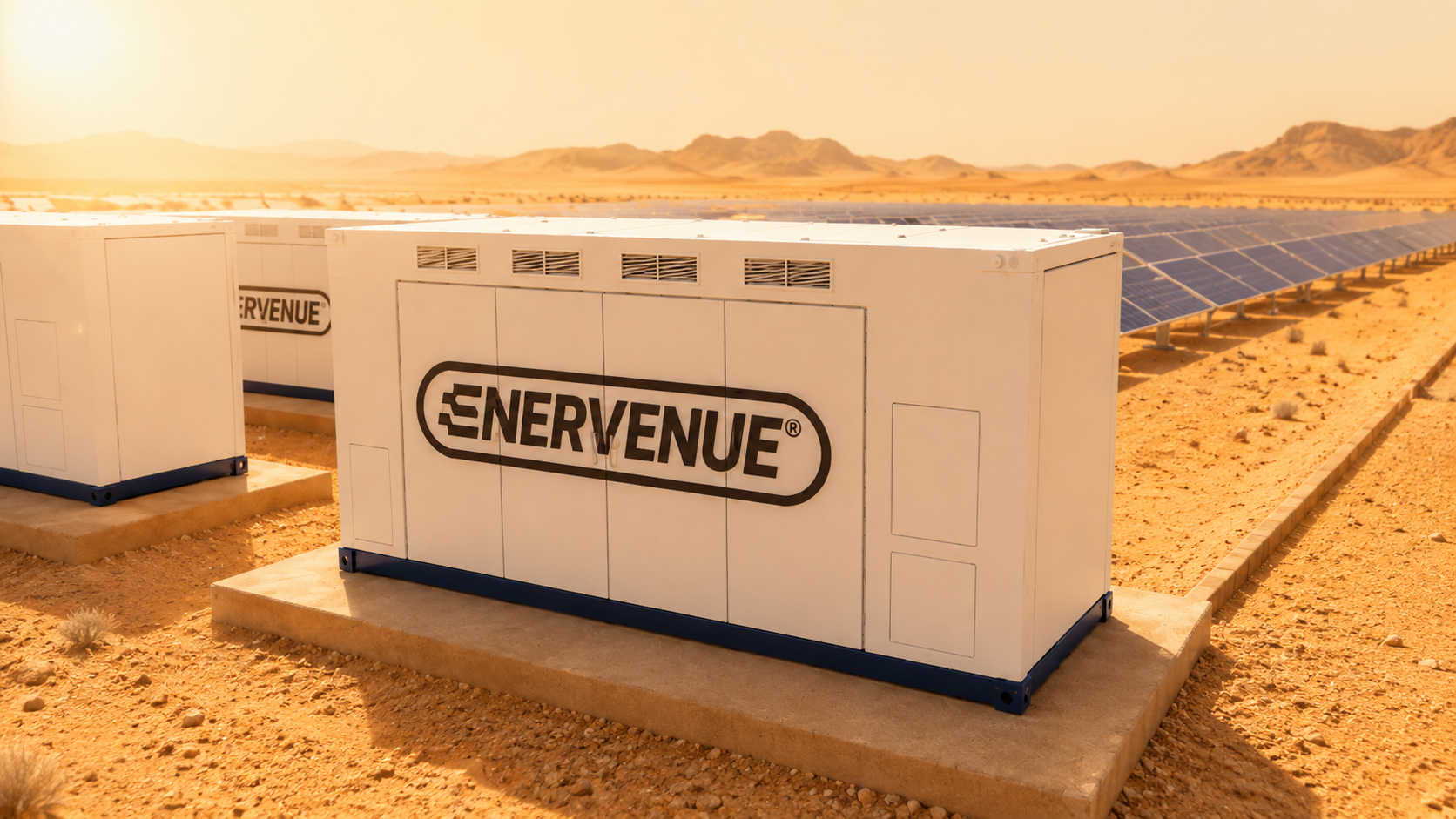
Durability across diverse climates and industrial environments reinforces total cost of ownership advantages over decades of operation.
Endurance as Strategic Advantage
As energy becomes a foundational constraint on economic growth rather than a background utility input, evaluation criteria must evolve. Storage technologies are no longer judged solely on how quickly they can be deployed, but on how reliably they perform across decades of sustained use.
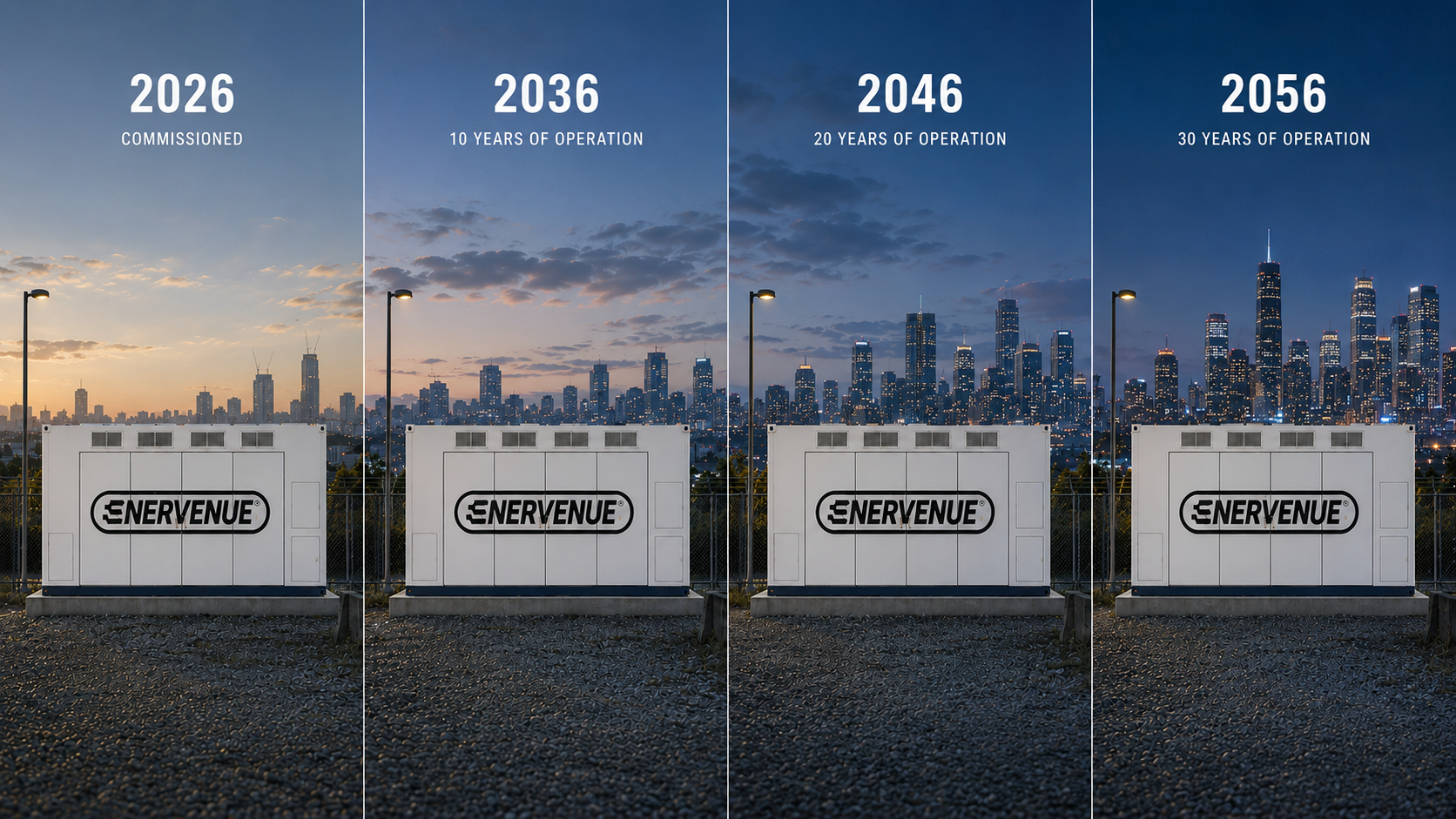
High cycle life enables greater lifetime throughput, fewer augmentation events, lower operational disruption, and stronger alignment with infrastructure planning horizons. These attributes compound over time, reshaping lifecycle cost and strengthening long-term project returns.
The advantage of endurance is not cosmetic or incremental. It is structural. It determines whether energy storage functions as replaceable equipment or as enduring infrastructure embedded within the capital framework of the grid.
Infrastructure, by definition, must endure.
The energy landscape is changing fast. Stay ahead.
Join industry leaders who turn to our briefing for insights and analysis on storage technology, market shifts, and real-world deployments.
— Early access to industry research & whitepapers
— Market insights on energy storage trends
— Technology deep-dives from our engineering team
Related Articles
Born to Empower. Built to Endure.
Speak with an Advisor