
video
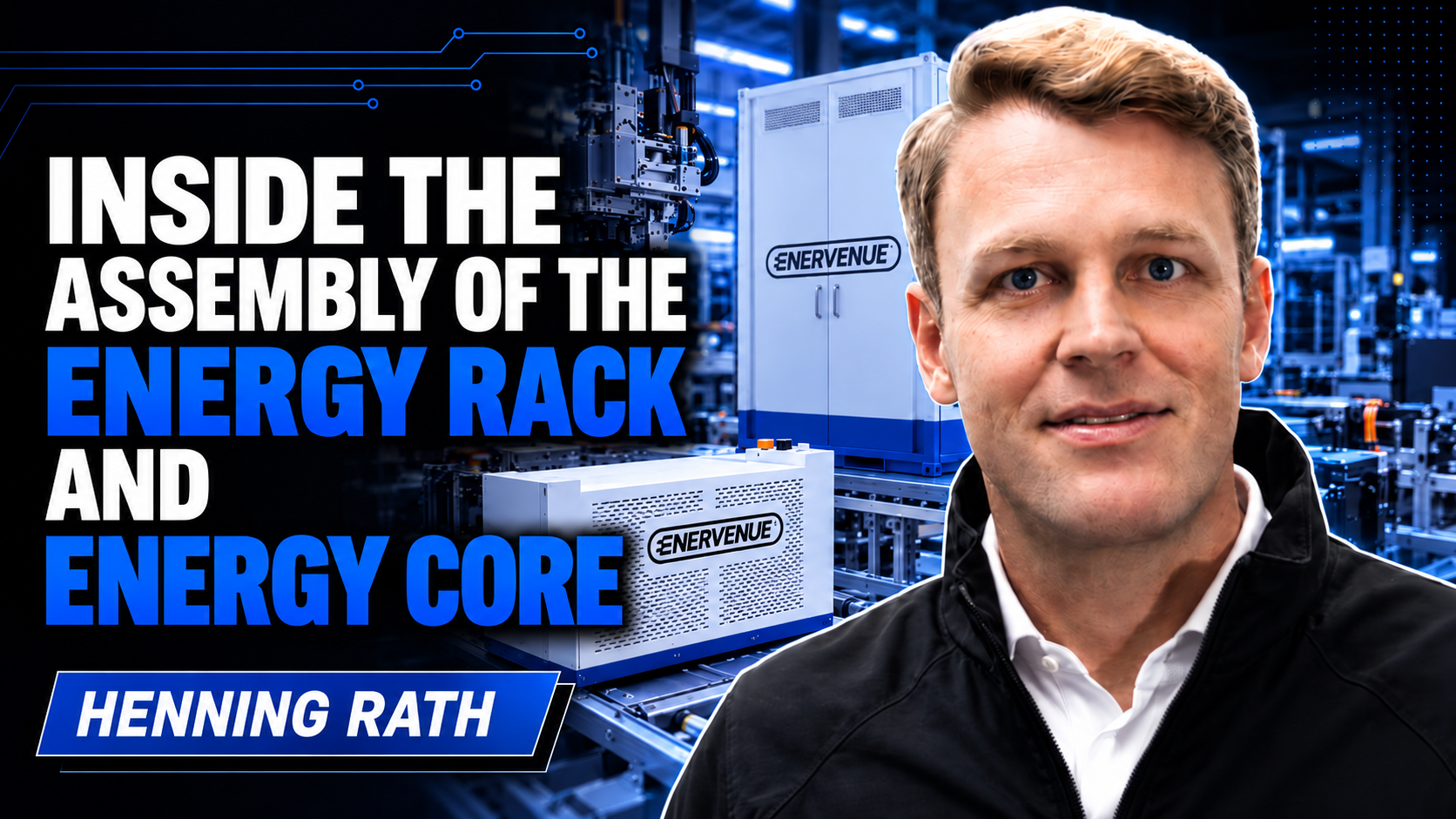
Inside the Assembly of the Energy Rack and Energy Core
Behind the scenes
Henning Rath
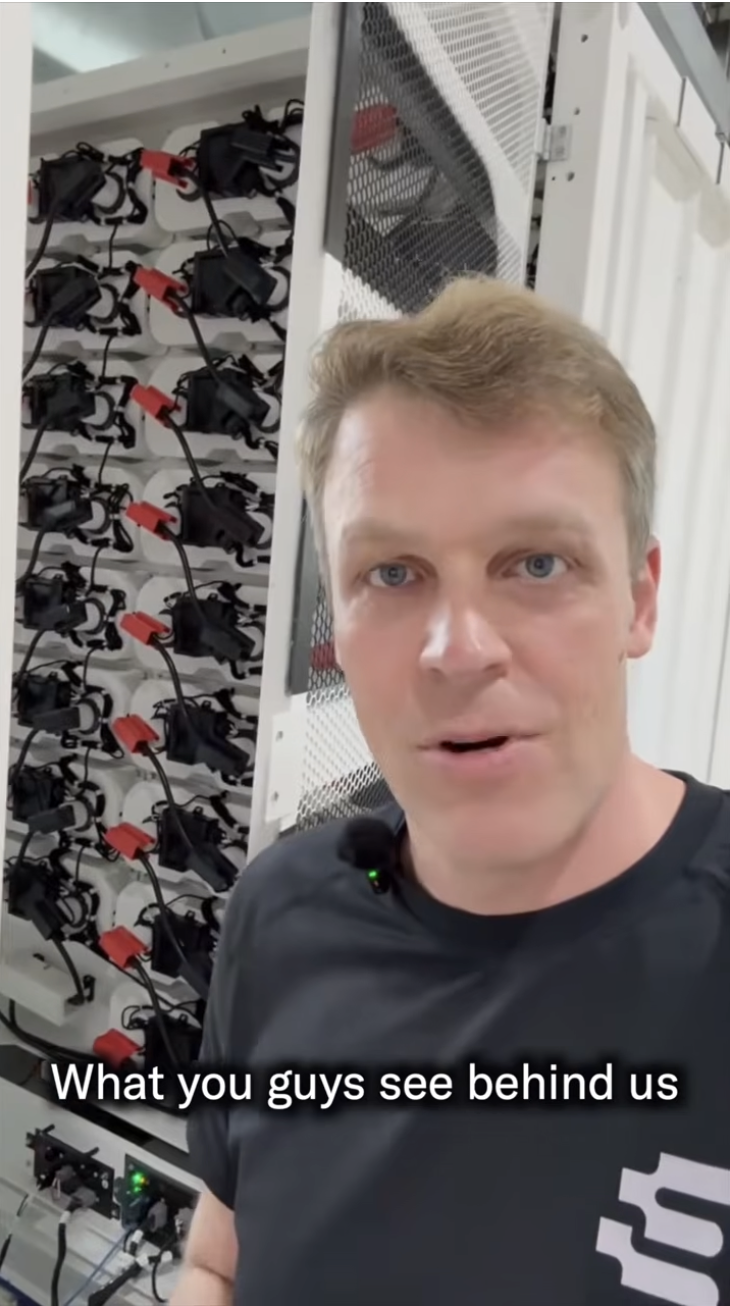
This footage provides a look inside the assembly and testing of two EnerVenue systems designed for different operating requirements.
The Energy Rack is a configurable 150 kWh DC block designed as a flexible, scalable building block for energy infrastructure.
Built around EnerVenue’s Aqueous Metal Cell (AMC™) technology, each Energy Rack ships pre-integrated with its Battery Management System, connections and wiring. It can be deployed within indoor structures or outdoor-rated enclosures and configured as part of larger energy storage projects.
Alongside it is the first prototype of the Energy Core, EnerVenue’s UPS solution being developed for remote and critical infrastructure.
That application starts with a different problem.
Most conventional backup power is designed to carry a site for a relatively short period until a generator starts. At a remote location, however, the generator may itself be unavailable or may be the reason backup energy is required.
The requirement changes from minutes of bridge time to hours of dependable energy.
The Energy Core is being designed around that reality.
Fewer battery-driven visits
At remote sites, the battery itself can create a recurring service burden.
Conventional lead-acid installations require periodic intervention and eventual battery replacement. That means travelling to the site, removing batteries, installing new ones and repeating the process over the operating life of the infrastructure.
Every intervention requires people, vehicles, equipment and time.
The Energy Core is designed for a 30-year design life and 30,000-cycle design capability. The objective is to reduce the number of battery-driven reasons to visit the site, allowing operators to focus maintenance activity on the infrastructure they intended to service.
Use more of the energy available
How a battery is used also matters.
Lead-acid systems are often operated conservatively because deeper discharge can shorten service life.
The Energy Core is designed for deep cycling, including discharge to empty and back, with operation at up to three cycles per day without requiring rest between cycles.
For a UPS application, that creates greater flexibility in how stored energy can be used when an outage lasts longer than expected or when the backup system is called on repeatedly.
Reduce dependence on cooling
Temperature is another important consideration at remote sites.
Lead-acid batteries can be particularly sensitive to elevated temperatures, which is one reason many installations depend on environmental control to protect battery life.
The Energy Core is designed to operate from -10°C to +45°C without active thermal management.
That reduces dependence on cooling equipment and removes another layer of supporting infrastructure that requires energy, maintenance and attention.
Designed around existing infrastructure
The final consideration is deployment.
The Energy Core is being designed to replace existing lead-acid installations without major changes to system configuration and within the space available at many current sites.
That matters because improving backup infrastructure should not require rebuilding the surrounding site around the battery.
Taken together, the value is larger than any single specification:
longer backup duration when minutes are not enough;
fewer battery-driven interventions;
deep and frequent cycling;
less dependence on active thermal management;
and a design intended to work within existing infrastructure.
The Energy Rack and Energy Core address different applications. What connects them is an engineering approach centered on endurance, safety, operational simplicity and energy systems designed around infrastructure time horizons.
Born to Empower. Built to Endure.
The energy landscape is changing fast. Stay ahead.
Join industry leaders who turn to our briefing for insights and analysis on storage technology, market shifts, and real-world deployments.
— Early access to industry research & whitepapers
— Market insights on energy storage trends
— Technology deep-dives from our engineering team
More Videos
Born to Empower. Built to Endure.
Speak with an Advisor