
Article ·
June 18, 2026
EnerVenue | The Future Energy Outlook
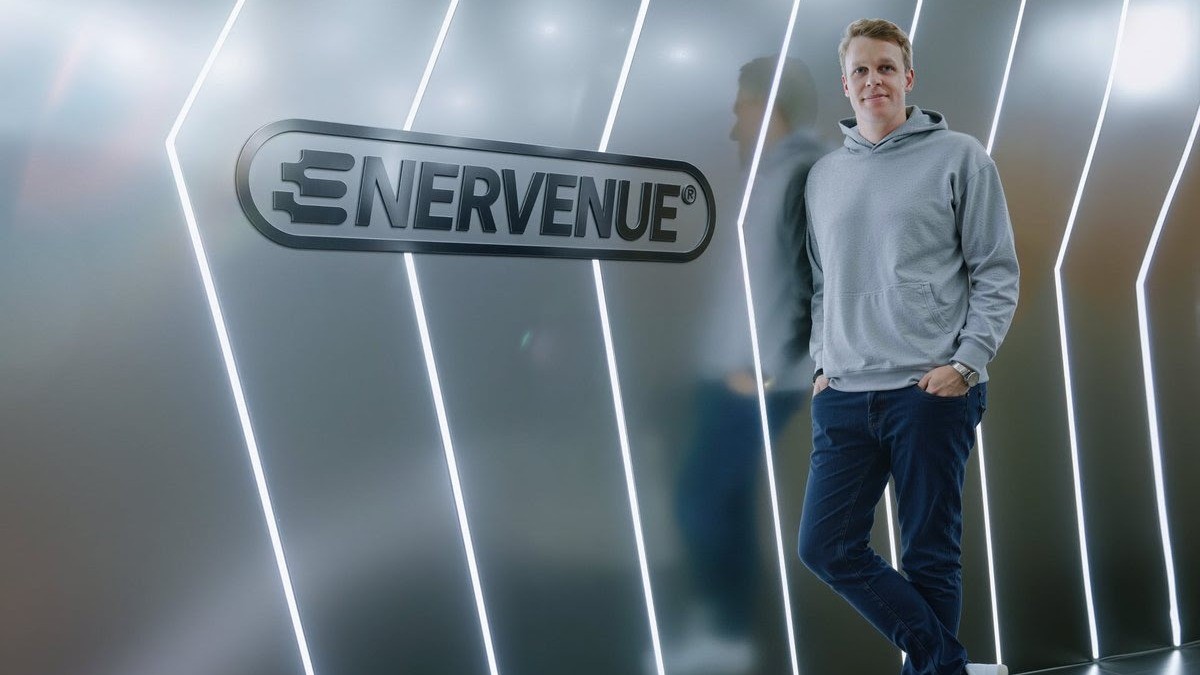
Henning Rath
Proven in the Field. Built to Scale.
For a decade, the energy-storage industry has been proving what the technology can do. Last year the world crossed a line: for the first time, it added more than 100 gigawatts of storage in a single year. BloombergNEF estimates annual storage additions reached 112 GW in 2025 and could exceed 300 GW annually by 2036, making energy storage one of the fastest-scaling energy technologies ever deployed. (BloombergNEF).
Recent geopolitical disruptions, including tensions affecting energy flows through the Strait of Hormuz, have accelerated a broader shift already underway: energy storage is increasingly being treated as strategic infrastructure tied to resilience, energy security, and grid stability. The EU alone is targeting a rise from 55 to 200 GW of storage by 2030 under its AccelerateEU package (SolarPower Europe).
Demand is only moving one way. The IEA expects electricity use by data centres alone to more than double by 2030 (IEA). For many operators, the challenge is no longer securing compute. It is securing power. In several major markets, grid connection timelines are emerging as a larger constraint on deployment than access to hardware or capital. The long-duration energy storage capacity a resilient grid actually needs has barely been built: The LDES Council and McKinsey model a need for 1.5 to 2.5 TW of long-duration storage by 2040 under net-zero scenarios eight to fifteen times all energy storage on the planet today(LDES Council/McKinsey, 2021).
So the questions I hear most now, from utilities, data-centre operators and infrastructure investors, are the practical ones: does the technology being built today hold up in the field, year after year, and can it be built at the scale infrastructure demands?
This month provides evidence for both.
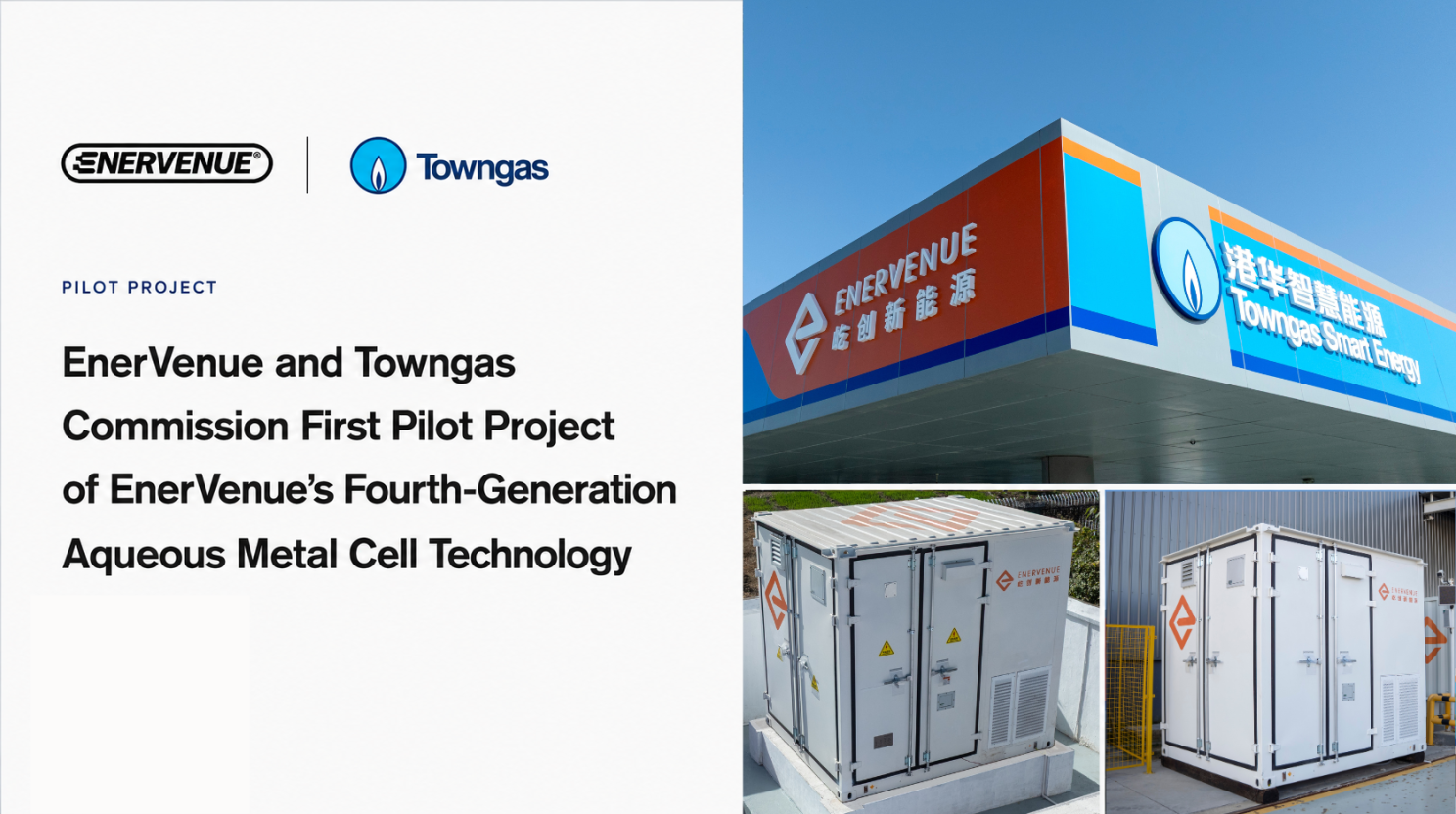
EnerVenue builds infrastructure-grade energy storage using its fourth-generation Aqueous Metal Cell (AMC) architecture, derived from the same metal-hydrogen principles that powered satellites for decades. In Changzhou, our fourth-generation Aqueous Metal Cell (AMC) is now running in the field, in a live pilot with Towngas, one of Asia's largest energy infrastructure operators. Fifty cells, charging electric buses from on-site renewables, cycling continuously the way grid infrastructure must. A pilot demonstrates performance. Infrastructure must demonstrate decades of reliable operation. EnerVenue systems are designed for 30,000 cycles.
Also in Changzhou, construction is under way on our first high-volume manufacturing line: a fully automated facility built to produce over 300 cells a day, with 250 MWh of capacity online by the end of this quarter and a path to 1 GWh in 2027 and multiple gigawatt-hours by 2028.
That is the difference between a promising technology and infrastructure you can build a grid on.
Our pilot proves it works. Our factory proves it scales. Infrastructure must do both.
Henning Rath, CEO, EnerVenue
EnerVenue and Towngas bring the first fourth-generation AMC system online in the field
EnerVenue's fourth-generation Aqueous Metal Cell technology is now operating in a live pilot with Towngas, one of Asia's largest energy infrastructure operators and EnerVenue's exclusive distribution partner in the region.
At Jintan, in Changzhou, fifty AMCs in an Energy Rack™ configuration pair on-site renewable generation with electric-bus charging, running on a two-to-four-hour continuous duty cycle. It is the first real-world deployment of EnerVenue's fourth-generation cell, and a direct test of what infrastructure buyers care about most: continuous cycling, operational durability, and reliable performance across a 30,000-cycle design life, three cycles a day for thirty years.
A pilot proves a system can run. This one is built to show it runs the way infrastructure has to.
A high-volume production line takes shape in Changzhou
Construction is under way on EnerVenue's first high-volume manufacturing line: a fully automated facility built to produce over 300 Aqueous Metal Cells a day. Phase 1 brings 250 MWh of annual capacity online by the end of this quarter, on a path to 1 GWh in 2027 and multiple gigawatt-hours by 2028.
Scale is the question every infrastructure buyer eventually asks. Not whether a battery works, but whether enough of it can be built, on time, to anchor a grid. The Changzhou line is that answer taking physical form.
.jpeg)
Latest from the Industry Hub
Why Safety Is Now a Procurement Issue
For years, safety in energy storage was treated as something to validate after the technology was chosen, a box for engineers, insurers and regulators to tick once the decision was made. That order is reversing. Safety is moving upstream, into the procurement, permitting and insurance decisions that determine which systems get built at all. The piece draws the line between safety that is engineered in as mitigation and safety that is inherent to the chemistry, and why that difference is starting to decide projects.
How High Cycle Life Changes Infrastructure Economics
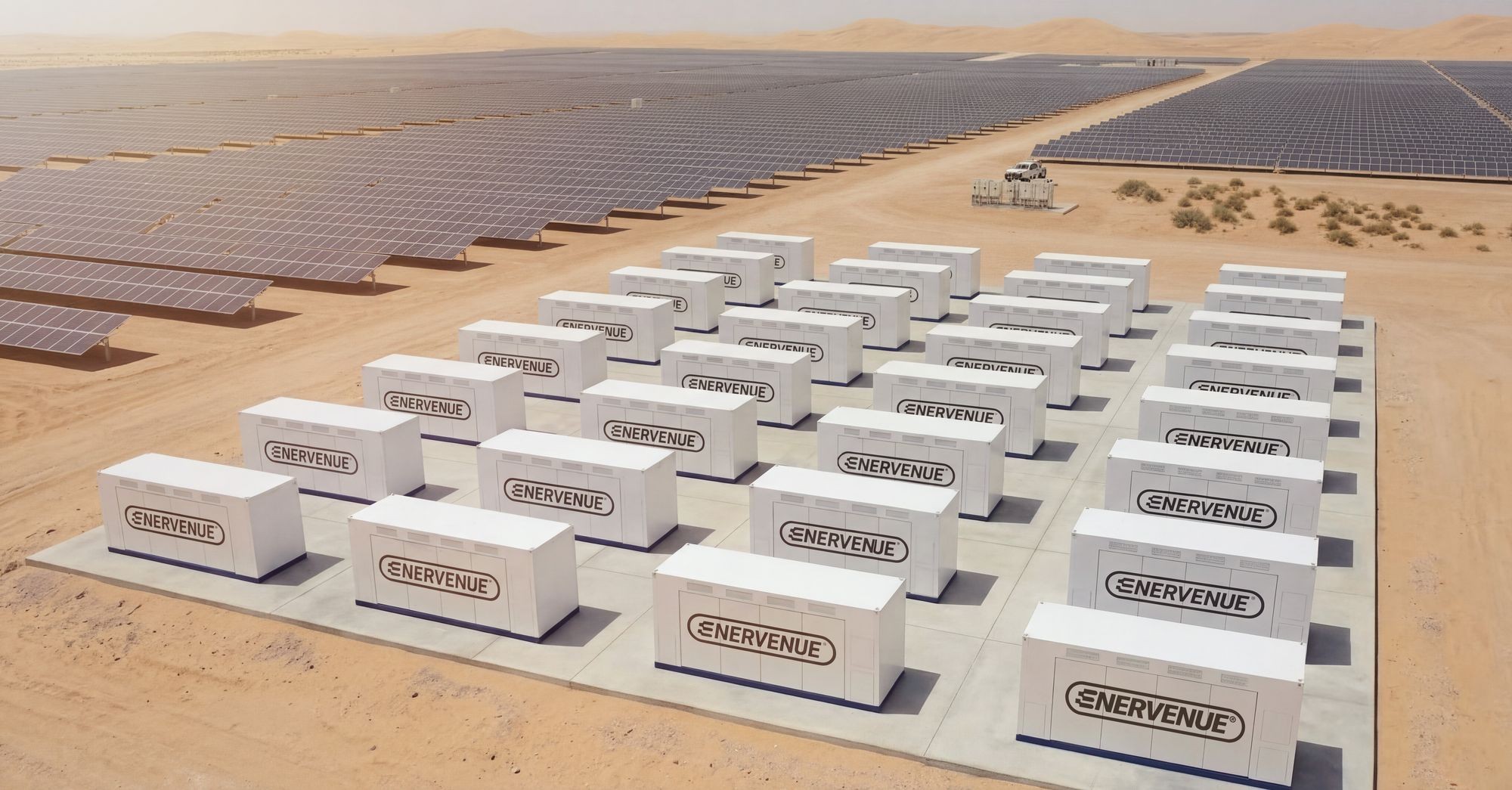
Energy storage is moving from a supplementary grid asset to foundational infrastructure, a shift the International Energy Agency's Electricity Market Report has been tracking. Once storage is infrastructure, cycle life stops being a technical footnote and becomes a primary economic variable: it decides whether a system behaves like a consumable to be replaced, or an asset that endures. The piece makes the case for evaluating storage on lifetime throughput, not upfront cost.
Born to Empower. Built to Endure.
New to EnerVenue? Learn what we build at About EnerVenue.
The Future Energy Outlook is A monthly read on the shift from energy technology to energy infrastructure.
The energy landscape is changing fast. Stay ahead.
Join industry leaders who turn to our briefing for insights and analysis on storage technology, market shifts, and real-world deployments.
— Early access to industry research & whitepapers
— Market insights on energy storage trends
— Technology deep-dives from our engineering team
Related Articles
.jpg)
.jpg)
Born to Empower. Built to Endure.
Speak with an Advisor