
Illustration
Status
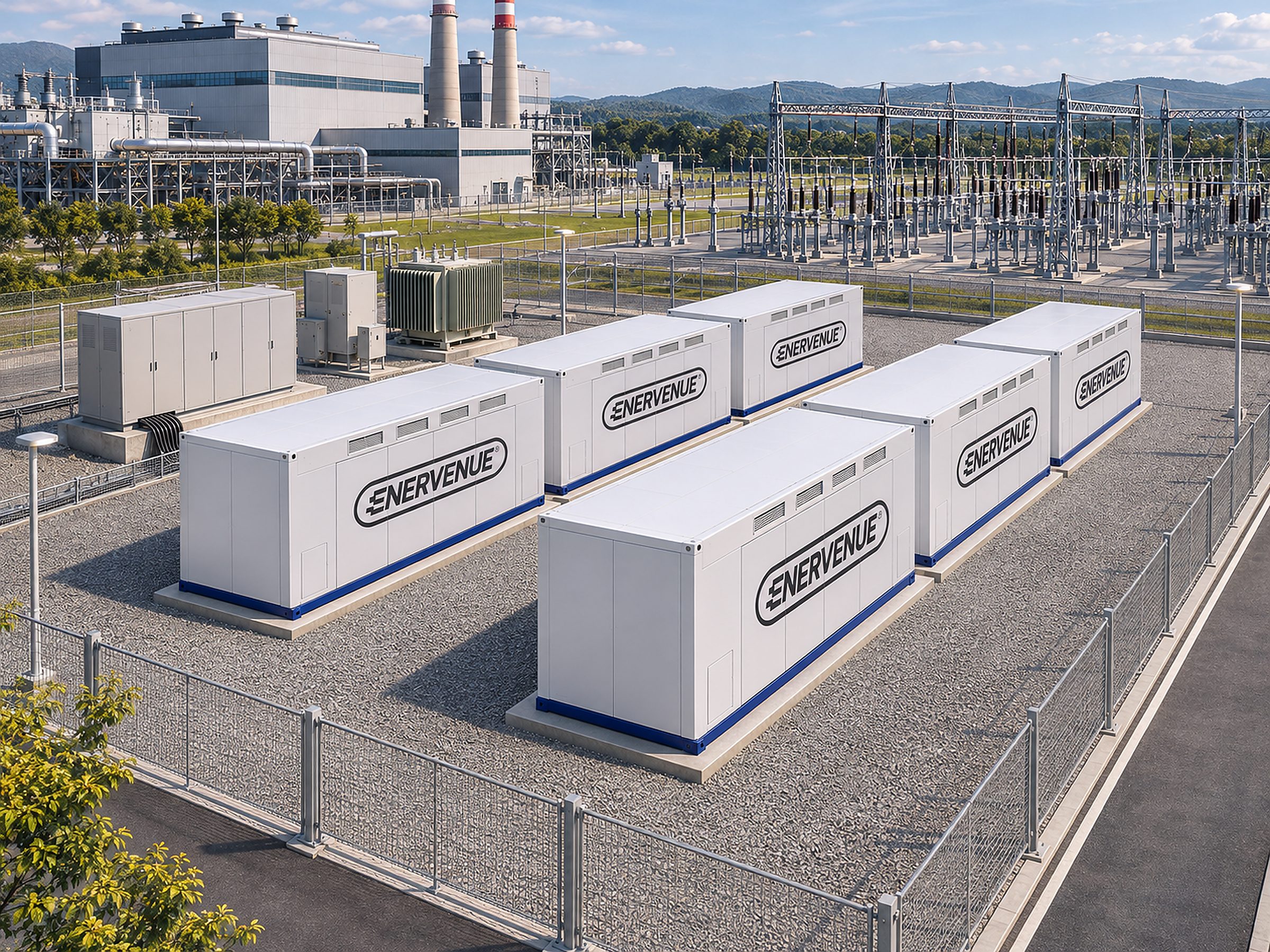
Illustrative scenario
Products
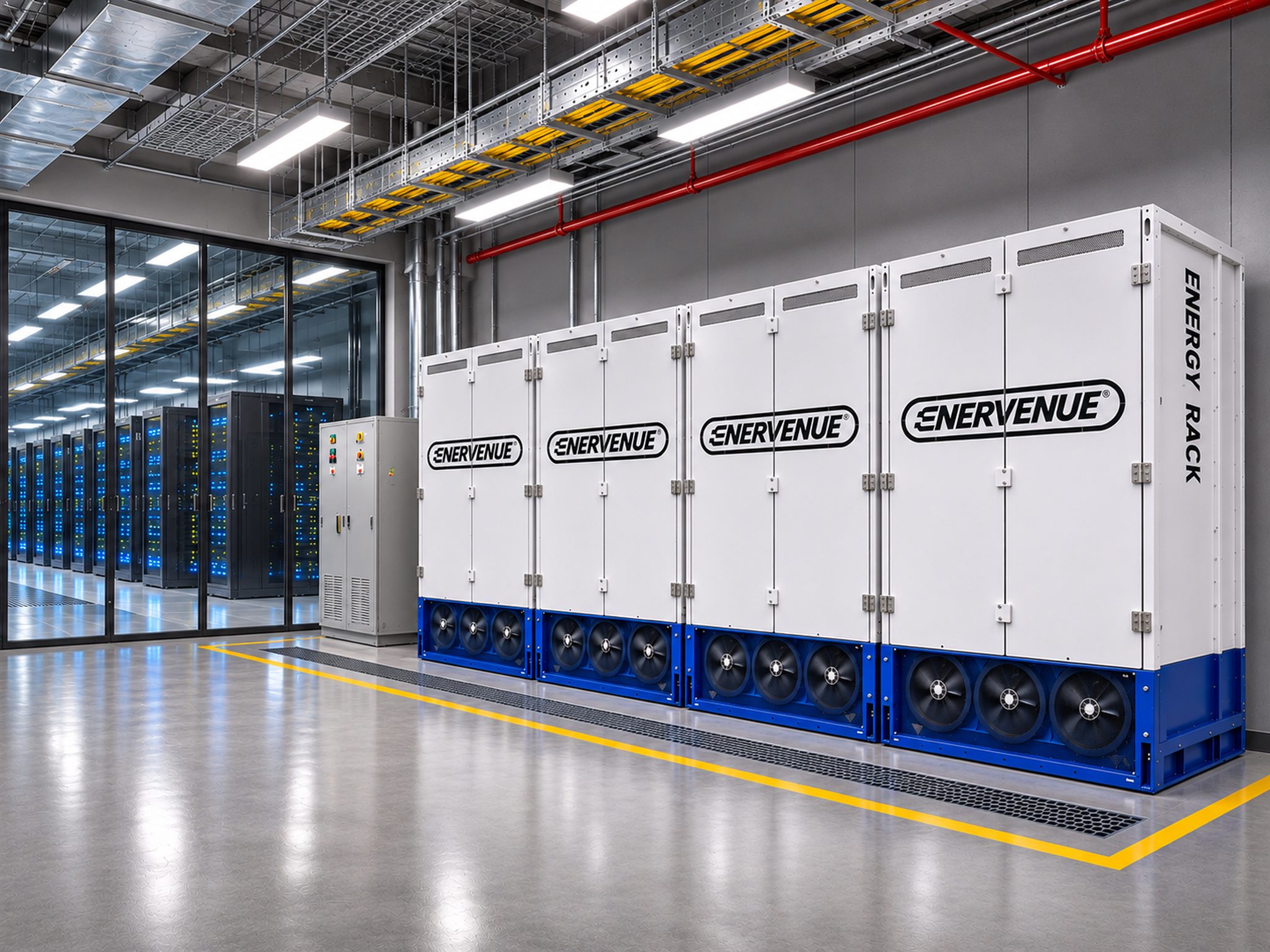
Energy Cube (108 kWh) and Energy Rack (150 kWh)
Duty
Daily peak shaving and demand response
Site conditions
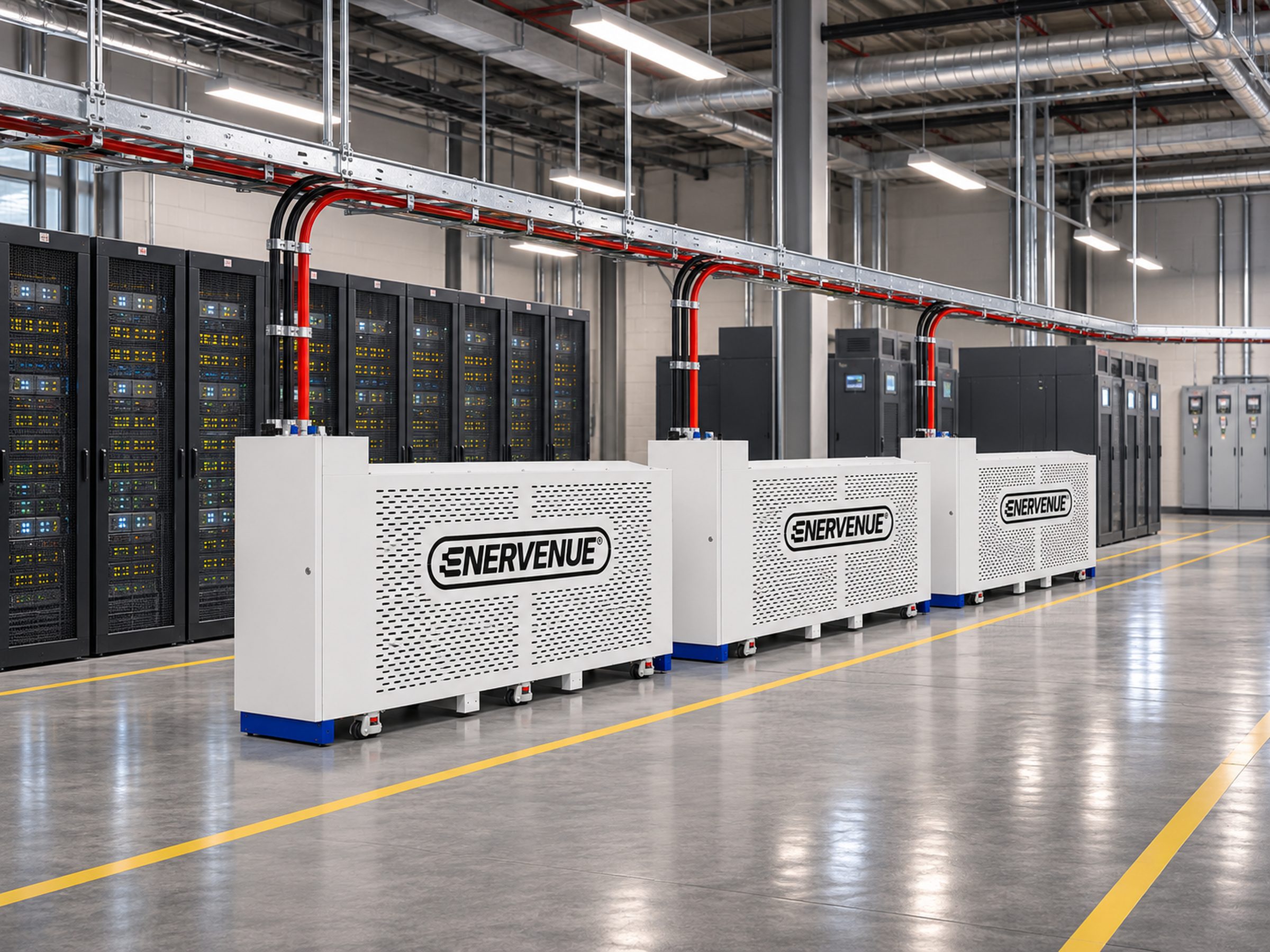
Inside the building, in a basement, a parking garage or a plant room
Evidence
Radiance Energy in Canada is an EnerVenue customer.
Many businesses pay a demand charge set by their highest draw from the grid in the month, and demand response programs pay sites to cut their draw when the grid is under strain. A battery can earn from both, but it has to cycle every day. In towns and cities the only space for it is often inside the building, where fire codes and insurers look most closely at its chemistry.
Market context
US utility demand response programs could cut about 32 GW of peak demand in 2025, and commercial and industrial customers provided about two-thirds of that.
Source: US Energy Information Administration, Electric Power Annual, October 2026, Table 10.3
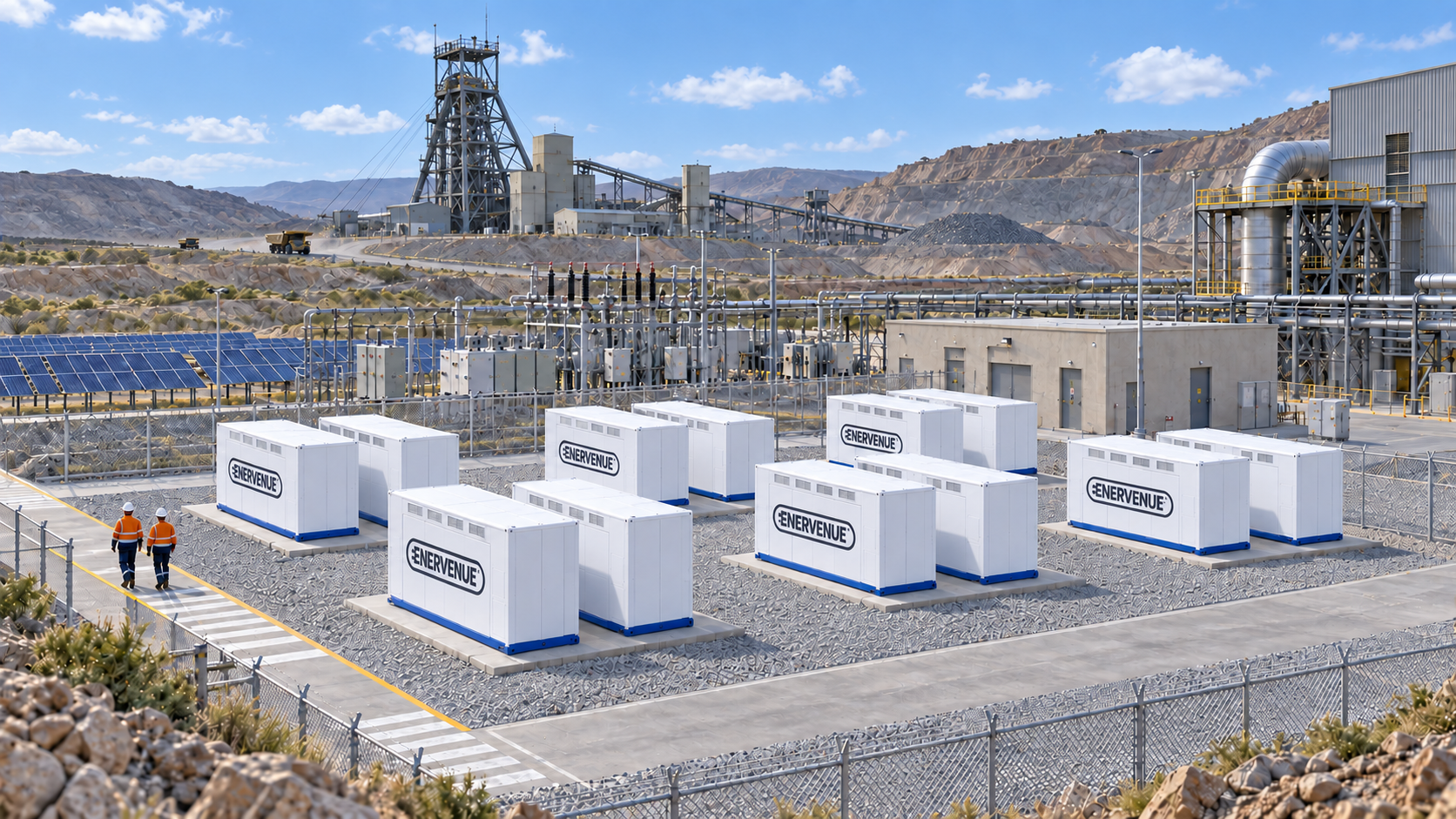
View the sourceThe Energy Cube and the Energy Rack can both be installed inside buildings, next to the equipment they serve. The battery charges when power is cheap and supplies it through the daily peak, or when the aggregator asks the site to reduce its demand. Its Aqueous Metal Cells (AMCs) are designed for up to three full cycles a day for 30 years and carry zero risk of fire from thermal runaway. Radiance Energy in Canada is an EnerVenue customer.
The demand charge on each monthly bill comes down, and the site can earn from demand response as well. The battery fits in a basement, a parking garage or a plant room, so there is no land to buy, and a lower peak leaves room on the grid connection for new load such as EV chargers.
This page describes how the battery works at commercial and industrial sites in general, using EnerVenue's product specifications. It does not describe a specific customer site or installation.
Join industry leaders who turn to our briefing for insights and analysis on storage technology, market shifts, and real-world deployments.
- Early access to industry research & whitepapers
- Market insights on energy storage trends
- Technology deep-dives from our engineering team
Born to Empower. Built to Endure.
Speak with an Advisor