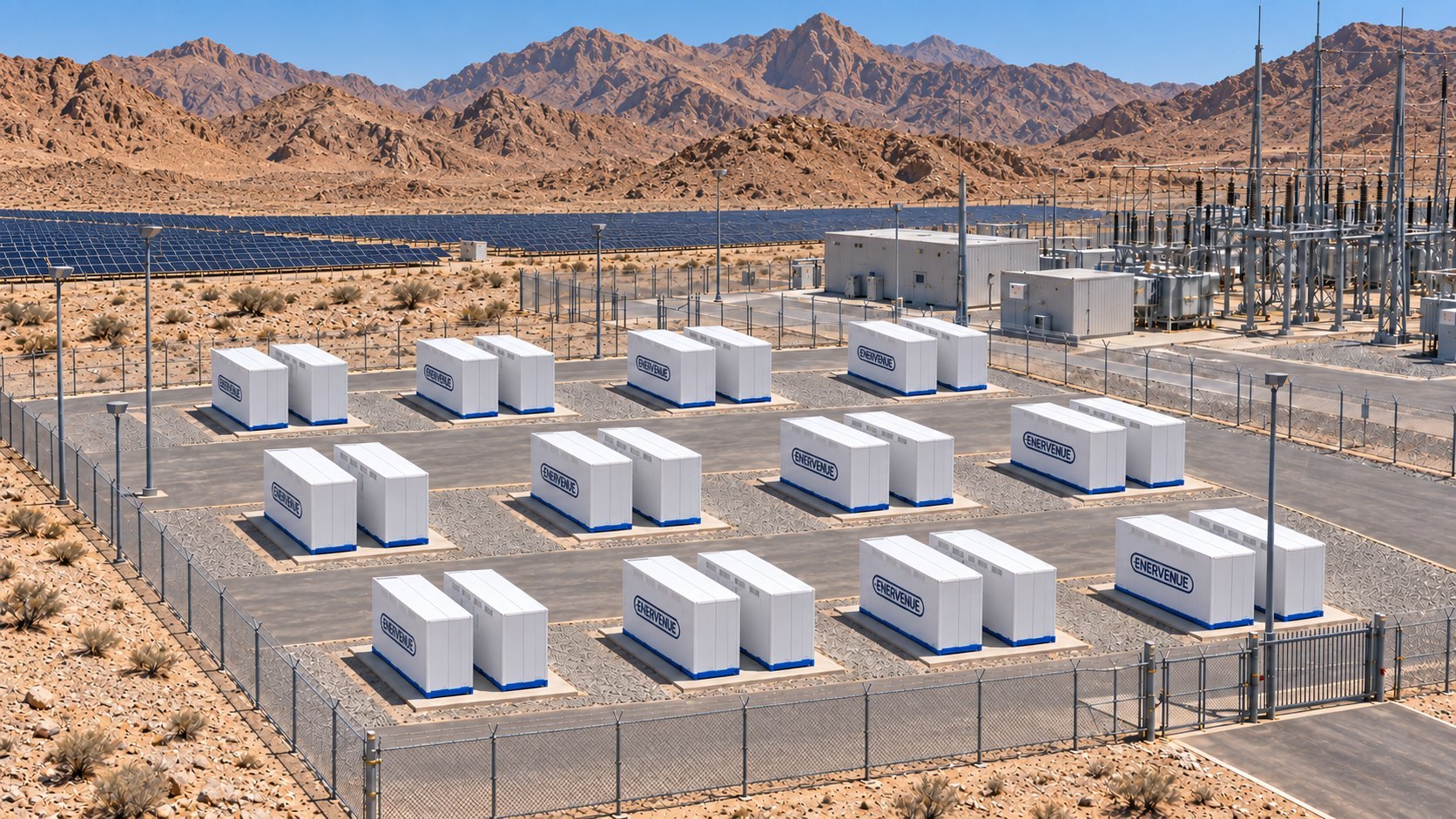
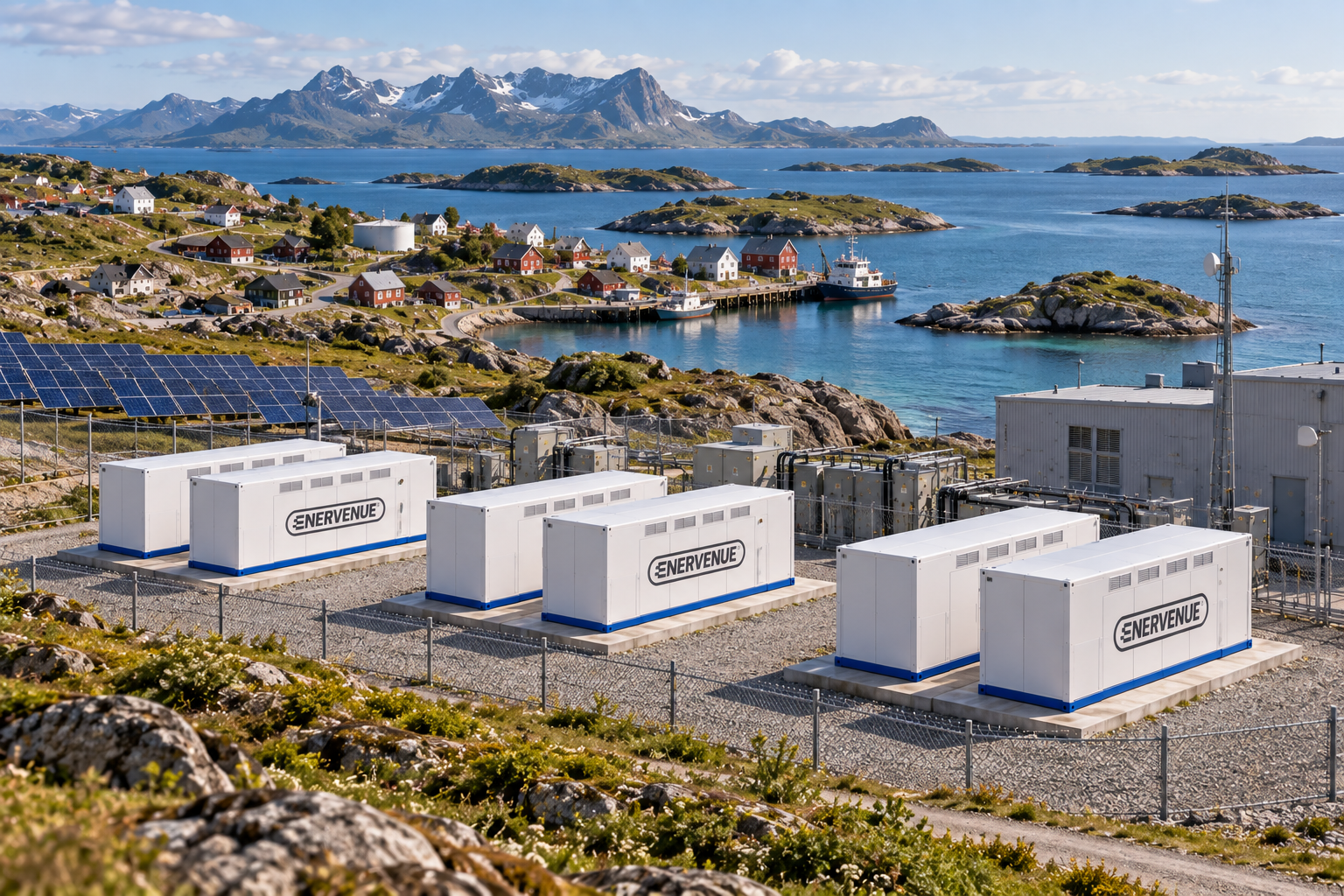
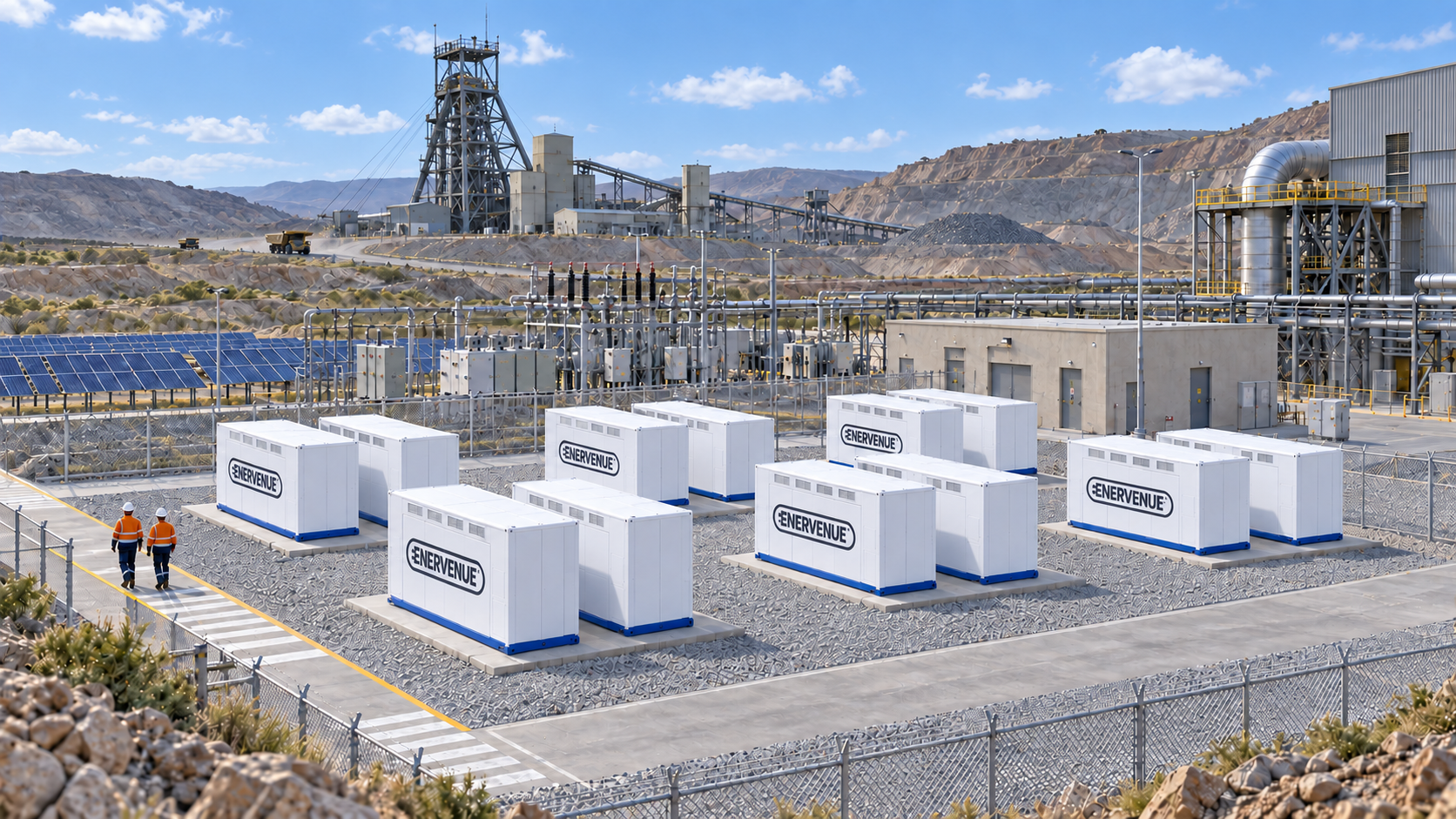
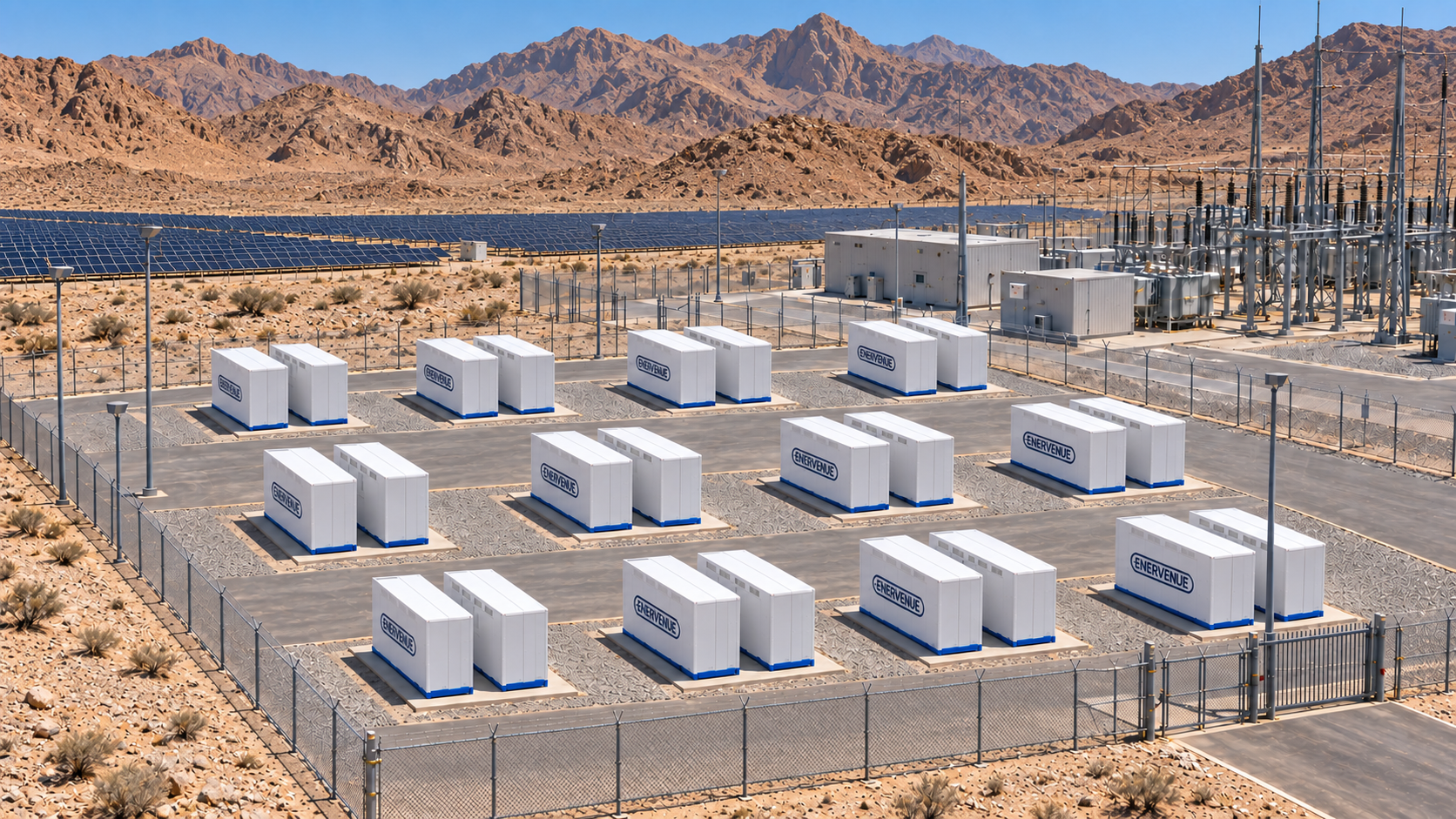
Sites beyond the reach of the grid run on diesel that has to be bought, delivered and stored, so many mines, oil and gas facilities and island communities have added solar arrays to cut the bill. Much of what those arrays could produce is never generated. With no grid to fall back on, the diesel generators hold the voltage and frequency steady and the solar inverters follow them, so at least one generator runs even at noon. Running a diesel engine at light load damages it, and a 2012 report from the IEA's Photovoltaic Power Systems Programme notes that generators are usually kept above 30 to 50 percent of their rated output. When the array could produce more than the share of demand the generators leave to it, the site's controller turns the solar inverters down. An EnerVenue engineering study modeled a remote industrial site, based on a real one, hour by hour for a full year. On paper, the site's solar array could supply 70 percent of its electricity. In the study it supplied 32 percent, because 55 percent of what it could have produced was switched off.
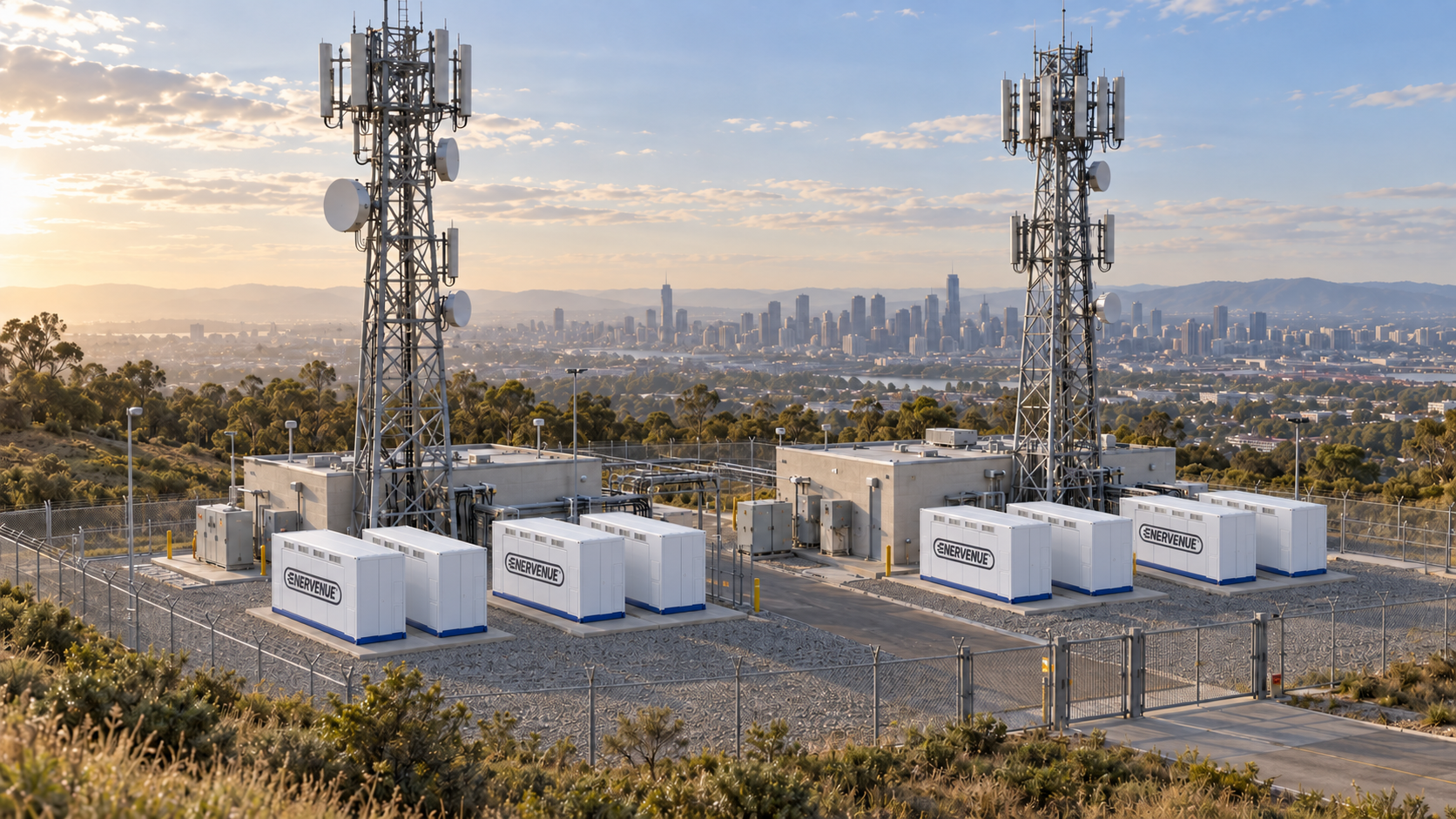
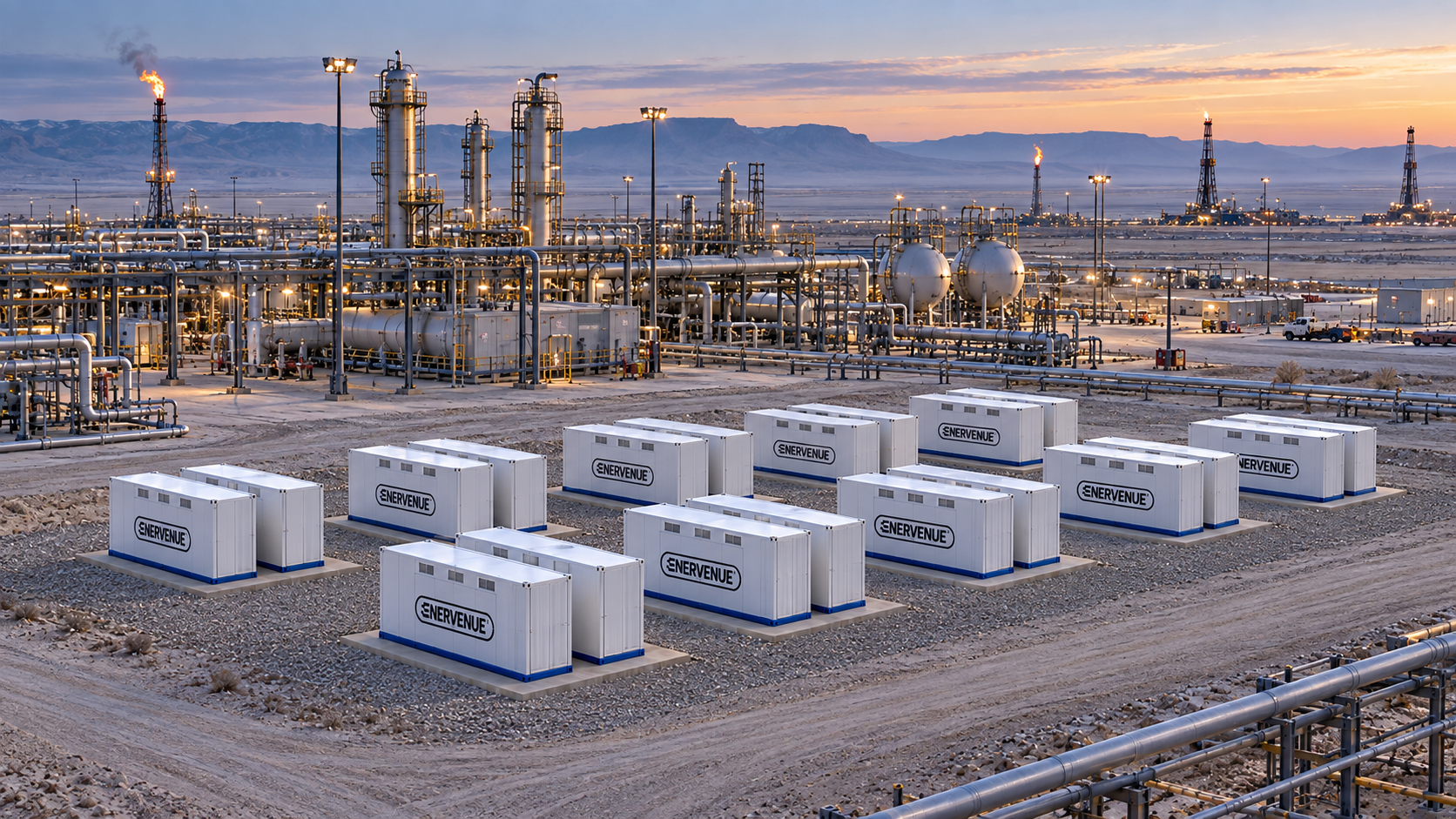
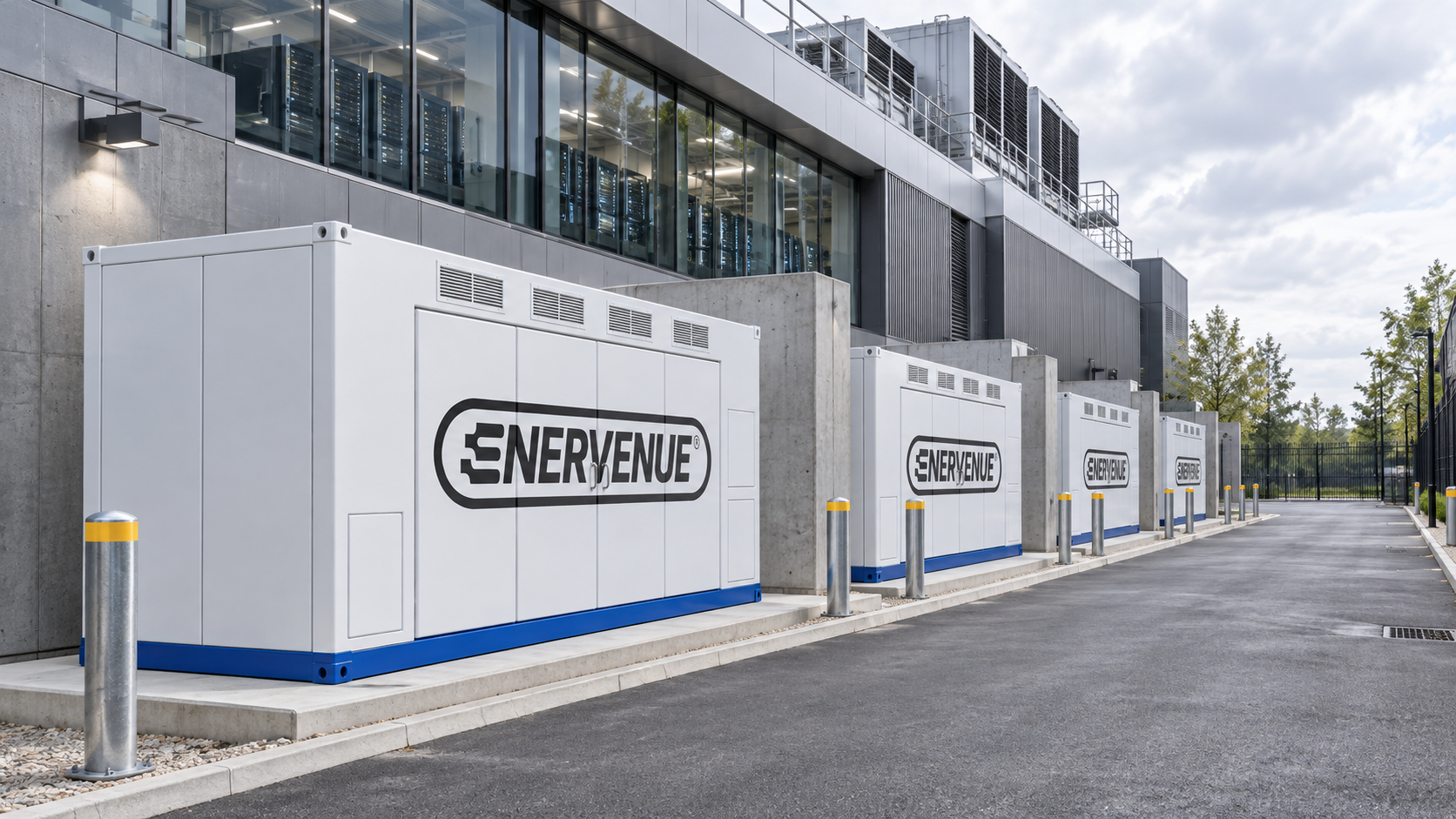
A battery at a remote site often faces intense afternoon heat, technicians several hours away, fuel and processing equipment nearby, and a full cycle most days. EnerVenue designed its Aqueous Metal Cell for this kind of site. The containerized Energy Prism operates from -20°C to +60°C on forced air, with a small air-conditioning load in hot months and no liquid cooling circuit to maintain. The cell uses a water-based electrolyte, carries zero risk of fire from thermal runaway and needs no fire suppression system. It is rated for 30,000 cycles over 30 years, so a battery cycled once a day needs no replacement in a 25-year life.
A battery stores the midday surplus and releases it after sunset, when the site would otherwise burn diesel. It can also meet the evening peak, so a new site needs six to eight generators instead of ten, and it covers sudden drops in solar output, so fewer spare generators run. With the array at its designed size, a battery lowered the site's lifetime cost of electricity by 10 to 22 percent in the study, and by up to 29 percent where the array was also enlarged. Every option would pay back its extra investment within seven years. Savings depend most on the delivered price of diesel, which the study set at US$0.85 a liter, and on how much demand falls after dark. The full study is free to download below, and its authors can run the same model on a site's own data.
This is a modeled study of a remote site based on a real one. The figures are scaled and anonymized and do not describe an EnerVenue customer or installation.

The full study sets out all five configurations, how they were modeled and how the results change with the fuel price. If you have a project in view, our engineers can run the same model on your site's own load, solar and fuel data.
Join industry leaders who turn to our briefing for insights and analysis on storage technology, market shifts, and real-world deployments.
- Early access to industry research & whitepapers
- Market insights on energy storage trends
- Technology deep-dives from our engineering team