
Article ·
August 7, 2026
Why Battery Fire Safety Has Become an Infrastructure Decision
Guy Henshilwood
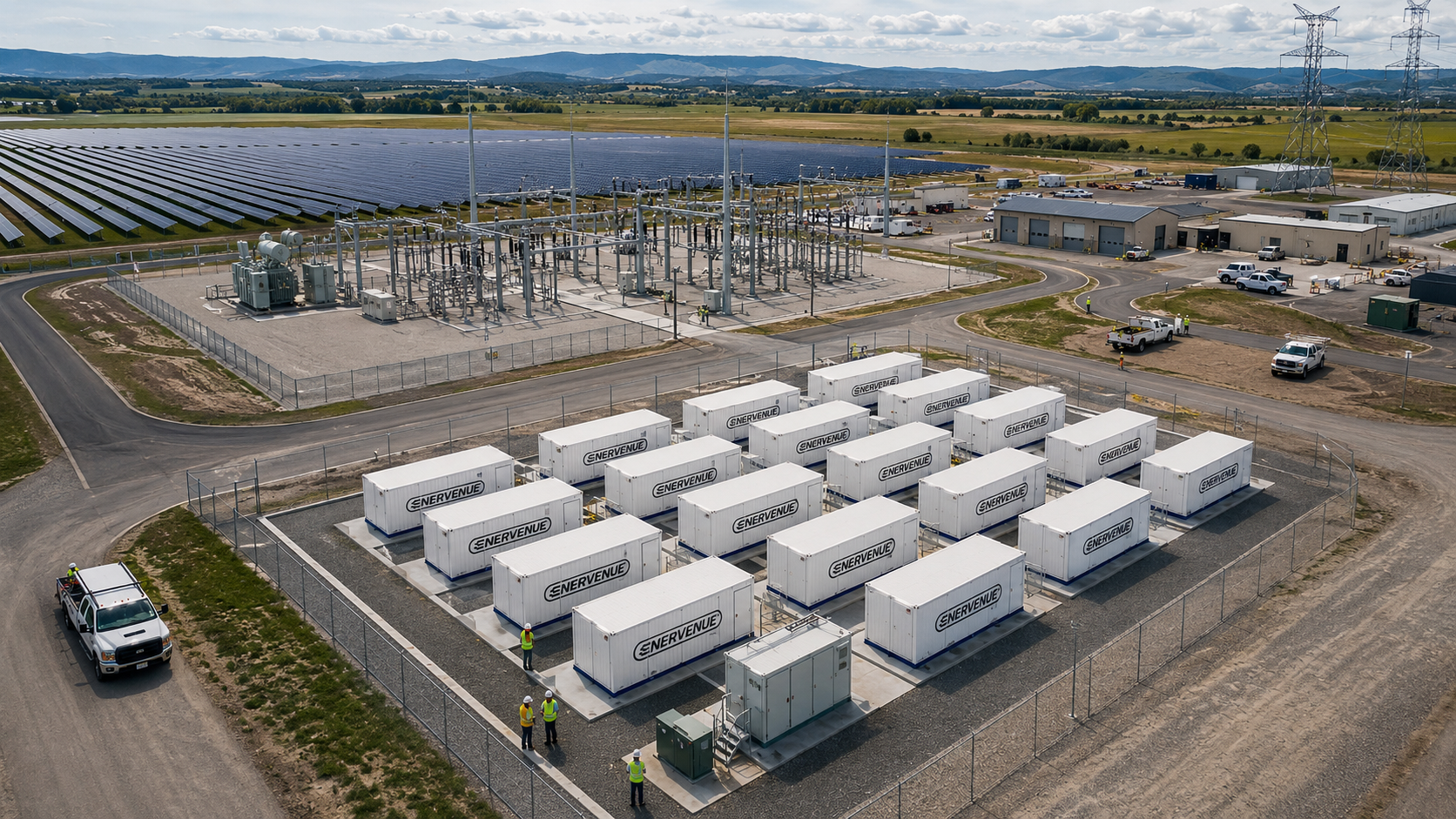
When infrastructure owners evaluate energy storage, they rarely ask a single question.
They ask dozens.
Can the project be permitted?
Will insurers support it?
How complex will operations become?
Will the asset remain dependable over decades?
Can it be financed with confidence?
These questions have always shaped infrastructure investment. Increasingly, they are shaping energy storage procurement as well.
There is a question underneath all of them. When a battery fails, the people who arrive first did not choose the technology. Firefighters, site staff and the surrounding community inherit a decision taken years earlier, in a procurement process they were never part of.Battery fire safety is no longer simply a technical issue managed by engineers. It has become one of the factors determining whether an infrastructure project can be delivered, operated and trusted over its full lifecycle.
The Cost of Fire Measured Across the Whole Project
A battery fire does more than damage equipment.
It can interrupt construction schedules, delay commissioning, increase insurance costs, trigger environmental remediation, require regulatory engagement and affect community confidence. Even when the battery represents only one part of a larger development, the consequences can extend across the entire infrastructure asset.
For infrastructure owners, the real cost is therefore not measured solely by the battery itself. It is measured by the disruption created across the wider project.
This distinction changes the way energy storage is evaluated.
Infrastructure investors do not assess components in isolation. They assess how each component influences the performance, resilience and financial certainty of the entire asset.
Battery safety has therefore become part of a much broader investment decision.
A Different Procurement Framework
For many years, energy storage technologies were compared primarily on installed cost, efficiency, energy duration and power capability.
Those measures remain important, and they are now assessed alongside a wider set. Infrastructure owners increasingly evaluate technologies through a broader framework that includes permitting, insurance, operational complexity, lifecycle economics and long-term reliability.
The objective is to reduce uncertainty over decades of operation. Permitting is where safety becomes economic. Separation distances, enclosure requirements and hazard mitigation analysis all shape how much of a site is usable and how long approval takes. The 2026 edition of NFPA 855 moves further in that direction, toward hazard mitigation analysis and large-scale fire testing rather than an assumption that a system is safe.
Insurers now examine how a specific system behaves when a cell fails, rather than pricing by category. That assessment feeds directly into financing terms, so a system that is straightforward to underwrite is easier to fund. This is why procurement conversations increasingly focus on long-term outcomes rather than day-one specifications.
Safety Is Becoming an Economic Variable
This shift also changes the role safety plays in project economics.
It is no longer viewed only as a compliance requirement.
It influences engineering complexity, emergency planning, insurance exposure, operating procedures and long-term asset management. Collectively, these factors shape the total cost of owning and operating energy infrastructure.
This is one reason lifecycle evaluation frameworks such as the Levelized Cost of Storage have become increasingly important. They encourage buyers to assess the total value delivered over an asset's operating life rather than focusing exclusively on its initial purchase price.
There is a difference between a system that is inherently safe and one that is made safe by layers of mitigation. Every layer has to be specified, validated, maintained and paid for, and every layer can fail. At the McMicken facility in Arizona in 2019, the suppression system discharged and the deflagration still happened, injuring four firefighters. Complexity is itself a risk.
Designing for Infrastructure Rather Than Mobility
These changing priorities are encouraging energy storage technologies designed specifically for stationary infrastructure rather than adapted from transportation applications.
EnerVenue's Aqueous Metal Cell (AMC™) reflects this infrastructure-first approach.
Its nickel-hydrogen architecture has been engineered for long-term stationary operation, with a 30-year design life and 30,000-cycle capability. These are figures intended to align with the planning horizons of utilities, industrial facilities and renewable energy projects.
The technology has zero risk of fire from thermal runaway, providing a different starting point for battery safety.
Accordingly, no dedicated battery fire suppression is required because there is no propagating battery fire to suppress. This statement applies specifically to the battery and does not remove broader site fire protection measures required by applicable codes or project design.
EnerVenue has completed cell-level UL 1973 and UL 9540A testing, while rack-level and system-level qualification remain in progress.
The architecture also reflects broader infrastructure priorities through its material composition: No lithium, no rare earths, more readily recyclable.
The Standard Is Changing
The technologies that define the next phase of energy storage will not simply be those that deliver energy efficiently. They will be those that reduce uncertainty across the entire infrastructure lifecycle.
Battery fire safety is an infrastructure decision, made in procurement and paid for across thirty years. The people who arrive first still did not choose the technology. The decision that protects them was taken long before they got there.
Born to Empower. Built to Endure.
The energy landscape is changing fast. Stay ahead.
Join industry leaders who turn to our briefing for insights and analysis on storage technology, market shifts, and real-world deployments.
— Early access to industry research & whitepapers
— Market insights on energy storage trends
— Technology deep-dives from our engineering team
Related Articles
Born to Empower. Built to Endure.
Speak with an Advisor